
How Dick Nixon tried to kill South Dakota Senator Karl Mundt
Author’s note: The difference between a memoir and an autobiography is that a memoir tells the story as best the author can remember it. An autobiography has to be fact-checked. This falls into the category of mini-memoir.
As a young speech and social studies instructor at Eastern State Normal School in the 1930s in Madison, South Dakota, once upon a time a teacher college that is now known as Dakota State University, Karl Mundt developed a name for two reasons. He founded the National Forensics League, a speech and debate organization for high school students nationwide. He traveled around eastern South Dakota demonstrating his skill as a public speaker. Soon the idea arose that it might be good if someday he might run for Congress. Since the Board of Regents could not abide political campaigning by its employees, Mundt was summoned to the Dean’s office.
You are an outstanding speech instructor, the Dean supposedly told him, and I do not want to lose you, but as a possible political candidate you cannot have a contract to teach here. “I do not need a contract,” Mundt replied. “I shall be happy to continue teaching, but if after two weeks there is no pay envelope in my mailbox, my enthusiasm for teaching will wane considerably.”
In 1938 he won a seat in Congress, then later the Senate. He was on the House Un-American Activities Committee, where he taught young California Congressman Richard Nixon how to hunt Commies. In 1954 Mundt chaired the Army-McCarthy hearings. He rose to become second-ranking Republican on the Appropriations Committee and delivered a fair amount of pork to South Dakota.
In 1969 he suffered a major stroke. His wife Mary, whom he met and married at University, believed he would recover and rebuffed efforts to have Karl step aside. As 1970 dawned it became clear that a Democrat might defeat Governor Frank Farrar and win the Governorship, and with it the ability to appoint a replacement to Mundt if he should die in office. Republican leaders wanted him to resign so Republican Farrar could appoint a replacement before the Democrats took the Governor’s Mansion.
First a hometown delegation of Republicans appeared at the door to Mundt’s home on Capitol Hill. Mary fussed in the kitchen and made coffee for them. We must protect this seat for the GOP, they argued. Karl deserves to enjoy well-earned retirement. Mary scolded them for being disloyal.
Next a delegation of statewide Republican leaders knocked on the door. A gracious welcome, but same thing. Shame on you, she said.
South Dakota’s Republican Governor Frank Farrar also tried, but that had no chance. Farrar had been floating the idea of running against Karl in the 1972 Republican primary. Mary adamantly opposed Karl’s resigning if it meant Farrar might appoint himself to the Senate seat.
Another try came from Everett Dirksen, the Republican Senate leader from Illinois, a beloved colleague. Gracious welcome, fussing in the kitchen to make coffee, but same plea, the same result, na-da.
Not long after that a black limousine pulled up to the Mundt residence. Out came the President of the United States, Richard M. Nixon. He walked to the door and knocked. Mary welcomed him in. “Oh, Mr. President, Karl will be so happy to see you.” Mundt was sitting on a couch and may have been cognizant but, because of his stroke, was unable to string words together — a horrible loss for such a powerful orator.
While Mary was in the kitchen fussing to make coffee, the Commander in Chief of the Armed Forces turned to the young Naval orderly who was helping care for the Senator. Nixon pointed to cigar boxes on the top shelf of a bookcase. “What are those?” he asked.
“We have to constantly hide cigars from the Senator,” was the reply. “The doctor says if he smokes another he will have a big stroke and die."
Thereafter, once a week a black limousine pulled up to the Mundt home and a representative of the White House personally handed the Senator a box of cigars from President Nixon.
Jody Severson is a retired political and marketing consultant whose first campaign was "Clean for Gene" McCarthy in 1968. He was a consultant in scores of campaigns at the statewide, local, and national levels from the north woods of Minnesota to the bayous of Louisiana. A native of Madison, SD, he has lived in Rapid City since the 1980s.
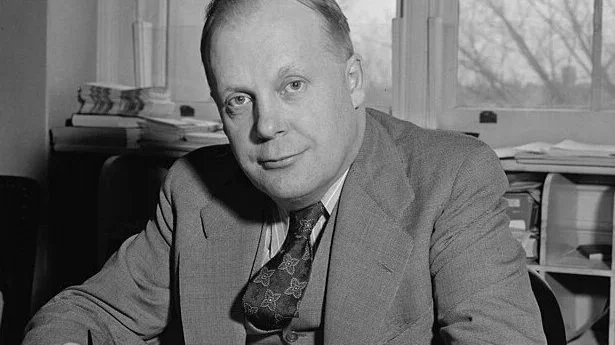
Photo: Then U.S. Representative Karl Mundt, 1940, public domain, wikimedia commons
The South Dakota Standard is offered freely and is supported by our readers. We have no political or commercial sponsorship. If you'd like to help us continue our mission to advance independent political and social commentary, you can do so by clicking on the "Donate" button that's on the sidebar to your right.