
Kamala Harris faced a challenging climb in 2024, but she failed. Democrats must look elsewhere in 2028
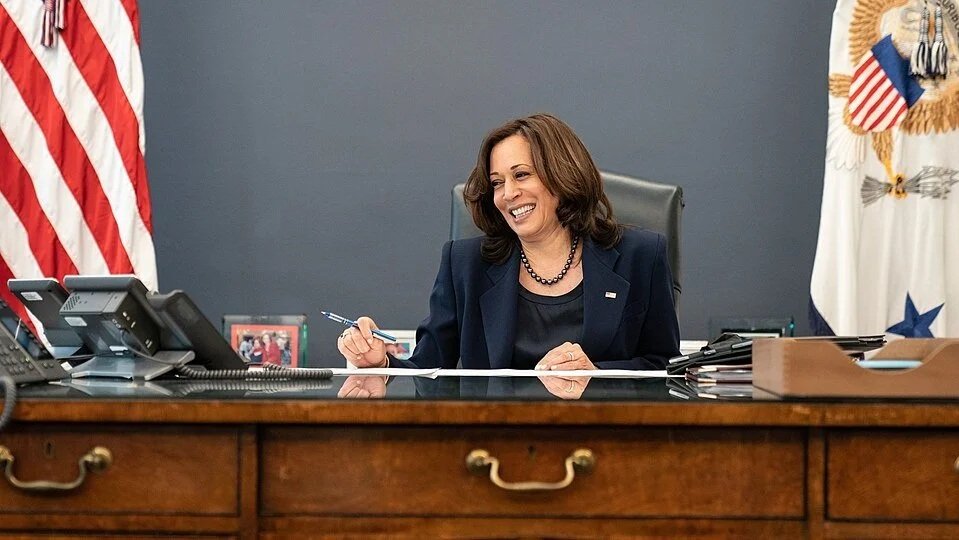
Do you remember Kamala Harris? Yes, I’m referring to Joe Biden’s beleaguered vice president who ran for president in the last election and lost (by just 1.5% in the popular vote) to Donald Trump.
She just came out with a very readable book, essentially a day-by-day diary, entitled “107 Days,” which is the period of time from Biden's decision to drop out of the 2024 presidential race until election day. That call, which came 24 days after his disastrous performance debating Trump in Atlanta, took Harris by surprise.
Clearly, the short time span eliminated any chance that the Democrats might mobilize behind another candidate for president and it also gave Harris no room for errors. She had to get it right on the first try. The Democratic convention which nominated her for president came off smoothly, but the Harris campaign stalled somewhat in the closing weeks before the election.
She was able to enunciate the threat to our democracy posed by a second Trump presidency, but she did not distance herself from Biden, who was unpopular with much of the electorate, or explain sufficiently what she would do differently.
In “107 days,” Harris asserts, “I didn’t have enough time to show how much more I would do to help” younger voters, who were concerned about the economy and basic issues like affordable housing.
When Harris appeared on “The View” just 28 days before the election, she was asked if she would have done anything differently than Biden over the previous four years. Her flat-footed response was that “there is not a thing that comes to mind,” clearly failing a test that she should have anticipated.
Harris concedes that “my staff were beside themselves” when they heard that answer. Her relationship with first lady Jill Biden, who presumably wanted her husband to stay in the race for re-election, may have been a problem.
“I suspect Jill hadn’t quite forgiven me for the 2019 primary debate, when I’d gone hard at Joe over his early opposition to busing” to achieve school desegregation.
Indeed, Biden called Harris the night before she debated Trump, to tell her that Philadelphia Democratic power-brokers wouldn't support her because she had allegedly been saying bad things about him. For her part, Harris was upset that Biden briefly put on a MAGA hat at a memorial observance in Shanksville, Pa., where they appeared together to honor the people who died on the airplane flight on Sept. 11, 2001, that crashed before it could fly into the Capitol building. The crowd at that event was dominated by Trump supporters.
In “107 Days,” Harris reveals that she was tempted to name Transportation Secretary Pete Buttigieg as her running mate, but was reluctant to ask voters to elect the first Black woman president and the first gay vice president in one fell swoop. When the torch first passed from Biden to Harris, Bernie Sanders called her and begged her to “please focus on the working class, not just on abortion.”
While Trump demeaned her and called her a Marxist on the campaign trail (and she returned the favor by agreeing that Trump was a fascist when questioned by Anderson Cooper), Trump was very gracious when she called him to express concern after the second assassination attempt against him. That was one of the very few interactions between the two rival candidates.
Harris acknowledges that Trump’s ubiquitous anti-trans TV ad in the weeks leading up to the election (“Kamala is for they/them. President Trump is for you.”) was devastating. She was running even with Trump in the polls in August, and pulled ahead of him after they debated in September, but then her campaign stalled.
Nonetheless, she relates that on the Sunday before the 2024 election, “I still believed our campaign of joy would triumph in two days.”
The 2024 election result was devastating for Kamala Harris, and arguably for America. It’s easy to sympathize with the difficult position that she was in, maintaining her loyalty to the unpopular president who had made her his running mate while trying to win in her own right. It’s worth noting that the last two sitting vice pesidents who managed to win the presidency in their own right were George H. W. Bush in 1988 and Martin Van Buren in 1836, and both of them served under presidents (Ronald Reagan and Andrew Jackson) who had remained broadly popular throughout their tenure.
To read Kamala's memoir is to realize that she has not given up her ambition to be our first woman president. “107 Days” is an effort to present her side of the story as she strives to rehabilitate herself after a narrow but crushing defeat. Nonetheless, the stigma persists.
As we start to focus on the 2028 election (yes, the second Trump presidency will end eventually), Democrats would be wise to find a new champion to rally behind.
Jay Davis of Rapid City is a retired lawyer and a regular contributor to The South Dakota Standard.
Photo: public domain, wikimedia commons
The South Dakota Standard is offered freely and is supported by our readers. We have no political or commercial sponsorship. If you'd like to help us continue our mission to advance independent political and social commentary, you can do so by clicking on the "Donate" button that's on the sidebar to your right.