
Trump order on savings plans is contradictory, imposes limits
For decades, a divide has limited the options for American workers who are saving for retirement. Assets held outside of retirement plans have access to hedge funds, private equity, real estate partnerships, and other alternatives that move differently from the stock market and can offer different kinds of returns. Meanwhile, 401(k) plans have long offered a limited menu — stock funds, bond funds, a target-date fund, perhaps a money market option, and little else.
This inequity matters because 401(k) plans are the first and easiest form of retirement savings for so many employees. Regulators assumed that plan participants, unlike more sophisticated investors with access to alternatives, lacked the knowledge to evaluate complex or higher-risk investments. Restricting their choices was a well-intentioned form of protection.
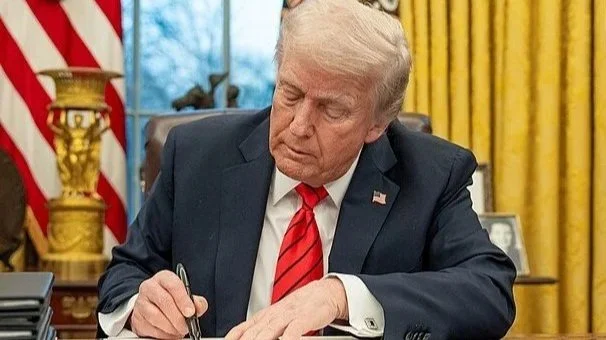
A new Trump administration policy may close this gap. The president just signed and executive order that directs the Department of Labor to open retirement plans to a broader range of investments and shield employers from the threat of lawsuits when they do.
The rationale is that government should be neutral on asset classes. It should not put its thumb on the scale by favoring some investment types over others. Marcia S. Wagner, founder of The Wagner Law Group, framed this clearly in a presentation at the 2026 Financial Planning Association SHIFT Conference. The relevant question is not what type of asset it is, but whether the people responsible for your retirement plan followed a prudent process and used fiduciary judgment in selecting it. I fully support this view.
Yet there is a contradiction. The same administration prohibited retirement plans from holding any investments tied to Russia or China, including Hong Kong and Macau. The legal exposure for plans that hold these assets may be criminal, not just civil. The national security concern is real, and I don’t dismiss it. But I would like someone in Washington to explain how banning investment in an entire nation’s assets is consistent with the principle that government should remain neutral.
The stakes of that ban deserve closer examination. Fareed Zakaria spent a week in China and reported on it April 19 on his CNN program. What he found should give every retirement investor pause.
China dominates the industries likely to define the next era of global growth, producing roughly 80% of the world’s solar panels, 60% of its wind turbines, 75% of its batteries, and 70% of its electric vehicles. It is doubling down on green energy, robotics, artificial intelligence applied to real industries, and advanced manufacturing, using three successive global economic shocks to deepen its lead in each one. These sectors are the foundation of the next economy, and American retirement plans are now being told to stay out of them.
To be fair, much of what the administration is doing here represents real progress. The proposed DOL regulations require that any investment on a plan menu be evaluated against six factors: risk-adjusted performance, fees, volatility, valuation, benchmarking, and complexity. A Supreme Court case, Anderson v. Intel, expected to be decided this fall, may further reduce the litigation threat that has kept most employers from offering workers anything beyond conventional options.
What troubles me is the contradiction at the center of this. The administration’s framework tells fiduciaries, “Evaluate each investment on its merits, follow a prudent process, and we will defer to your judgment.” The China prohibition tells those same fiduciaries, “Never mind. There is no process to run and no judgment to exercise, Washington has already made the call.”
This does nothing to take the government’s thumb off the scale; it simply moves it. And, in barring investments on such a broad scale, it is a remarkably heavy thumb.
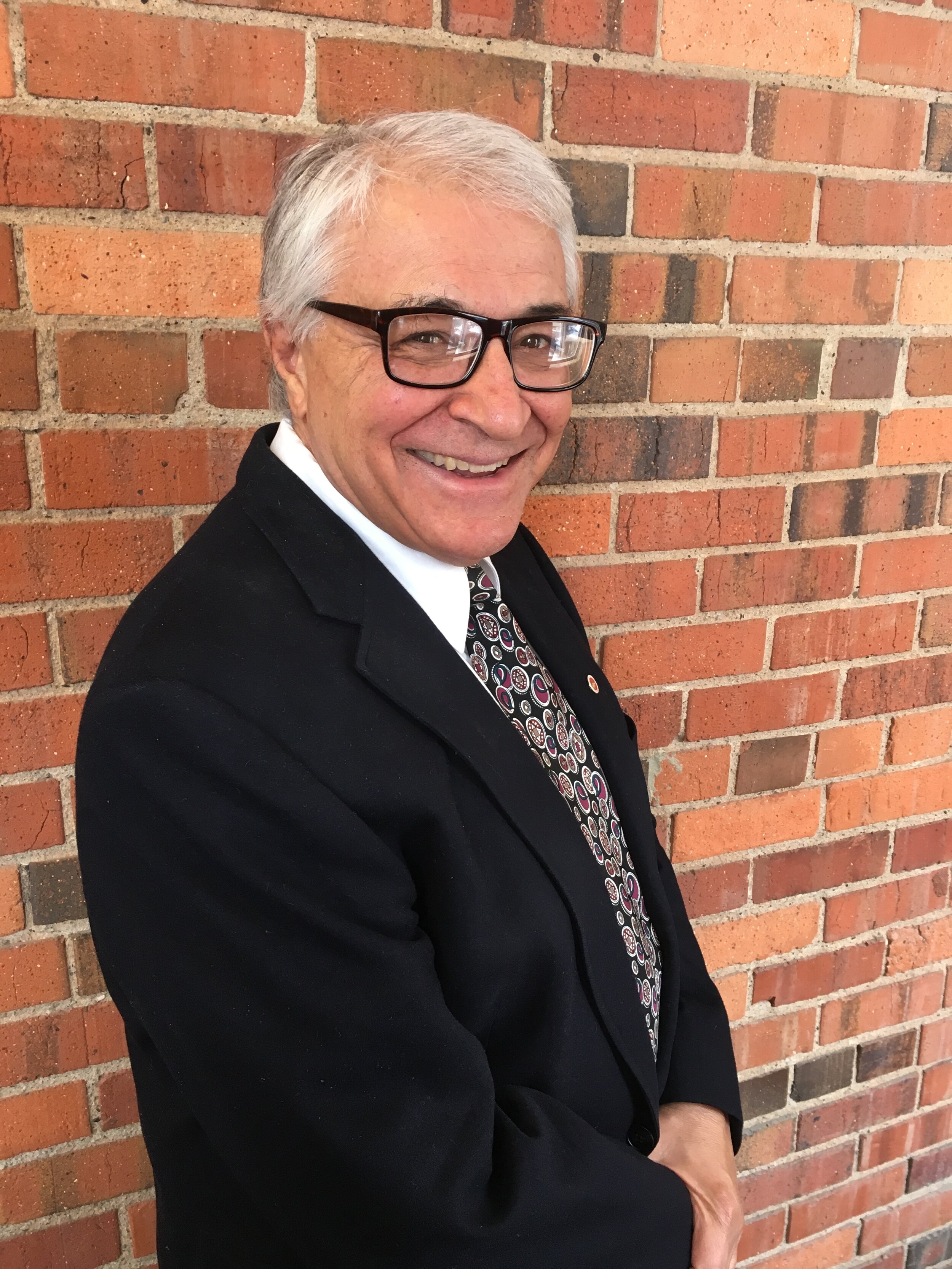
Rick Kahler, CFP, is a fee-only financial planner and financial therapist with a nationwide practice, Kahler Financial Group, based in Rapid City. His co-authored books include “Coupleship Inc.” and “The Financial Wisdom of Ebenezer Scrooge.”
The information provided is for educational purposes only and should not be construed as investment advice. The views expressed are subject to change based on market or economic conditions. Past performance is not indicative of future results. Any reference to potential benefits is illustrative and may not apply to your individual circumstances. You should consult with your financial adviser before making any investment decisions. KFG, LLC is an SEC-registered investment adviser.
Photo: Trump signing an executive order, public domain, wikimedia commons
The South Dakota Standard is offered freely and is supported by our readers. We have no political or commercial sponsorship. If you'd like to help us continue our mission to advance independent political and social commentary, you can do so by clicking on the "Donate" button that's on the sidebar to your right.
Follow us and comment on X and Bluesky




.jpg)