

A long history of politics, power, scandal — and the exception to the rule
Politics is about power.
It’s the power to inspire, to persuade, to be at the head of a movement. The most effective politicians are able to lead people, craft legislation and impact the city, county, state or country they represent.
Politics also attracts people who seize control and use it to benefit themselves and, in some cases, harm others. We have witnessed the worst of that with dictators and rulers who create turmoil and cause great harm.
We also have seen political figures who impose their will, and their desires, on people who had admired or even loved them. That goes along with elevating people to places of authority.
When they cross a line, and hurt others, they should be held accountable. That foes not always occur.
It did last week when Maine Democratic Senate candidate Graham Platner withdrew from the race. Platner, a 41-year-old Marine veteran and oyster farmer, rose from obscurity to become the Democratic nominee for Senate. But his messy private life raised eyebrows and questions, as women reported unseemly behavior, often fueled by heavy drinking.
Another woman, whom he had been in an ongoing casual relationship for several years, accused him of rape. The woman said Platner forced her to engage in sex and intimidated her when she asked him to stop.
That was enough for the Democratic Party leaders who had endorsed him despite his controversial past, which included sexually themed texts to women while he was married, a tattoo with Nazi overtones and mental health issues. They called for him to step aside.
After denying the accusation, Platner accepted the political reality and ended his campaign. Even in doing so, he said he was innocent of the charges but unable to move forward without the party’s support.
“This is incredibly difficult, because I know that some will think it’s an admission of guilt, and it most certainly is not,” he said. “We’re not doing it because of the allegations, we’re doing it because of the structures that are being taken away from us by those in power.”
That might be his parting message. He was a comet who flew across the Maine political skies briefly and burned out.
It was an interesting coincidence that on the same day that Platner was forced off the national stage, President Donald Trump was ordered to pay almost $5.8 million to a woman a jury convicted him of sexually abusing and then defaming her.
E. Jean Carroll said Trump assaulted her in a dressing room in a luxury department store in Manhattan in 1996. Carroll was awarded almost $5.8 million by a jury and the money was placed in escrow. The U.S. Supreme Court refused to review the case.
A federal judge ordered the money released and given to Carroll. There is another $83 million in defamation compensation awarded to Carroll by a different Manhattan jury after a 2024 trial.
Trump, of course, has loudly and repeatedly denied assaulting Carroll, saying she is “not my type.” That comment seems both puzzling — is there a type he does assault? — and troubling.
Numerous women have accused the president of sexually assaulting them. His three marriages, numerous affairs and boasts of his rampant sexual behavior only add fuel to the fire. Is the president of the United States a serial sexual criminal?
The Republican Party and its top officials, like Senate Majority Leader John Thune, were silent. They are so used to outrages from Trump, they just ignore them as they stack up.
On the other hand, Platner’s sordid personal life was quickly exposed and he was forced from the political arena. The Democratic Party denounced him and withdrew its support.
We witnessed something similar when Minnesota Sen. Al Franken resigned in January 2018 after several women said he had touched them without their consent and had kissed them against their will.
Democrats called for him to step down, and despite saying he did not intend to harm any women, he left the Senate. Further research has raised questions about the allegations, but Franken’s political career was derailed. He has said he regrets his decision to resign.
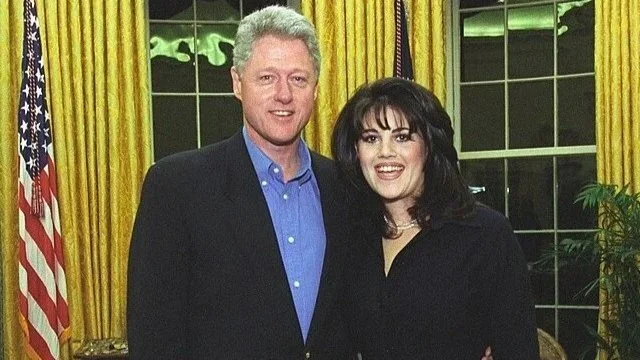
President Bill Clinton was investigated and impeached after reports of his string of affairs and sexual misconduct emerged during his second term. It cast a shadow over his presidency and may have cost Vice President Al Gore the 2000 election.
The contrast between how Democrats have responded to sexual abuse allegations, while Republicans, even with gritted teeth, have continued to support Trump is remarkable. It seems there are separate standards depending on what party you belong to and what office you hold.
Sex scandals are not new in American history. Founding Fathers Alexander Hamilton and Thomas Jefferson were ensnared in them, as was President Andrew Jackson, who married his wife while she was still wed to another man.
Presidents Grover Cleveland, Warren Harding, Franklin Delano Roosevelt, John F. Kennedy — a man with Trump-like sexual habits — and Lyndon Johnson, along with countless members of Congress, governors and other public figures couldn’t refrain from engaging in unseemly private behavior that became all too public.
Add Graham Platner’s name to the list, and prepare to enter more in the future. For most of them, it means a sudden and humiliating drop from political leader to figure of public ridicule.
Not for all, however. There is at least one exception to that rule.
Fourth-generation South Dakotan Tom Lawrence has written for several newspapers and websites in South Dakota and other states for four decades. He has contributed to The New York Times, NPR, The London Telegraph, The Daily Beast and other media outlets. Do not republish without permission.
Photo: public domain, wikimedia commons
The South Dakota Standard is offered freely and is supported by our readers. We have no political or commercial sponsorship. If you'd like to help us continue our mission to advance independent political and social commentary, you can do so by clicking on the "Donate" button that's on the sidebar to your right.
Follow us and comment on X and Bluesky