

Rounds, Thune split on bill that speeds up project permitting process
Our newly re-elected U.S. Sen. Mike Rounds just showed some willingness to buck his party by voting against a major permitting reform bill. It’s called the Bipartisan American Affordability and Jobs Act of 2026 (BAAJA) and it's about 500 pages long. You can read a 2-page summation here.
Basically, BAAJA streamlines the permitting process for energy projects. Time savings are significant. Depending on the project, years of permitting could be reduced to just months if BAAJA passes.
Anybody familiar with governmental red tape understands the appeal of a law like this. In fact, the bill just passed the senate 62-33. Sen. Thune voted aye.
Rounds explained his nay by claiming that the bill infringes on state and local rights and gives developers a built-in advantage by transferring contested cases to federal regulators if they haven’t been settled locally after 12 months.
Thune supports the bill because it eliminates bureaucratic delays, spurs the economy and creates jobs.
I haven’t seen environmental issues being addressed by either senator.
Reflexively – and as it turned out, incorrectly – I thought environmental interests would be uniformly opposed to legislation that speeded up energy-related projects. Turns out, there’s some ambivalence among environmentalists when it comes to this bill. An AI overview concludes that “environmental groups are divided over the Bipartisan American Affordability and Jobs Act (BAAJA), with many major organizations opposing the bill while some clean energy and climate advocates support it.”
As to opponents:
The National Resources Defense Council says the bill weakens environmental safeguards and public participation.
The Climate Justice Alliance says it expands fossil fuel infrastructure and harms frontline communities
As to supportive environmental groups:
The Citizens Climate Lobby says permitting bottlenecks slow down environmentally friendly projects.
The Solar Energy and Industries Association says it will put downward pressure on energy prices, and deploy more affordable, reliable solar and storage for American families and businesses.
As to me, what do I know? Only this:
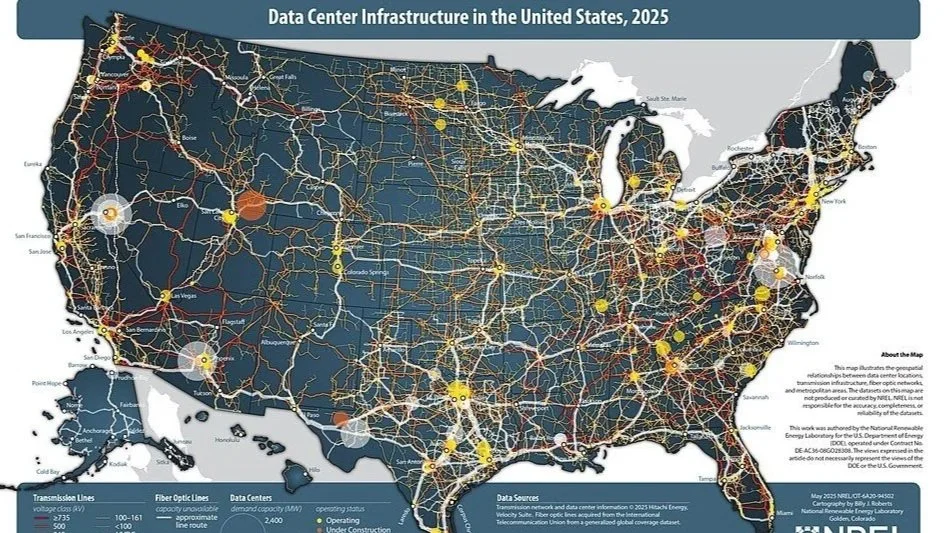
Those generalized arguments, pro and con, are plenty relevant, of course, but nowadays the compelling question is how this legislation will affect the development of data centers. Much as I appreciate Thune’s economic development approach, I lean toward Rounds’s local control argument. I don’t like that after a year, disputes over energy development, including data centers, will automatically move from local to federal regulation if BAAJA passes the House of Representatives.
The prospect of a vote in the current House seems iffy, but we’ll find out soon enough. My hope is that it will stall and get an intra-party test in the next Democratically-weighted congress, which is a fresh representation of how the voting public leans on a matter as significant as this one.
John Tsitrian is a businessman and writer from the Black Hills. He was a weekly columnist for the Rapid City Journal for 20 years. His articles and commentary have also appeared in The Los Angeles Times, The Denver Post and The Omaha World-Herald. Tsitrian served in the Marines for three years (1966-69), including a 13-month tour of duty as a radioman in Vietnam. Republish with permission.
Graphic: public domain, wikimedia commons
The South Dakota Standard is offered freely and is supported by our readers. We have no political or commercial sponsorship. If you'd like to help us continue our mission to advance independent political and social commentary, you can do so by clicking on the "Donate" button that's on the sidebar to your right.