

South Dakota farm loans need more than rising land values
Editor’s note: The author is a professor of Economics in Brazil. His research includes studies of American rural economics, including economic issues here in South Dakota.
Rising farmland values can give a farm room to borrow. Using that room to finance another season also gives the farm more debt to repay. South Dakota’s agricultural debate needs to keep both sides of that transaction in view, especially when the land market and the income earned from working the land move at different speeds.
SDSU Extension’s 2026 farm real estate survey estimates that average-productivity, nonirrigated cropland was worth $6,268 an acre statewide, up 1.3% from 2025. The average cash rental rate fell by $6, to $160 an acre. The reported gross rent-to-value ratio was 2.6%, before property taxes and other landlord expenses. That ratio describes rental income relative to land value. It does not measure a farm operator’s profit or ability to repay a loan.
These are regional survey estimates, with substantial variation across South Dakota, rather than appraisals of individual properties. Their significance is the different direction of land values and rents: the price of an asset can remain firm even as one source of income from it weakens. A stronger balance sheet deserves attention, but so does the money available to meet the next payment.
Recent credit evidence reinforces that distinction without justifying a blanket verdict on South Dakota farms. An August 2026 Kansas City Federal Reserve analysis of surveys across participating districts found that farm income and loan repayment conditions continued to weaken in the second quarter, although the deterioration eased. Agricultural land values remained supportive. Those regional findings should not be mistaken for a measure of distress on every South Dakota farm.
Land equity is valuable financial protection. It can support access to credit and give an owner flexibility during a difficult season. Yet borrowing against appreciation converts that flexibility into a future claim on income. The relevant question is whether the new debt buys time for an operation capable of recovering, or finances a shortfall that will return with the next production cycle.
The distinction is sharper for a tenant farmer. Appreciation belongs to the landowner, while rent is an expense for the operator. An owner farming partly rented acreage faces both positions at once. Treating rising land values as a general improvement in agriculture can therefore obscure how differently the same market affects the people producing on that land.
Lenders assessing the next advance need to distinguish recoverable collateral from cash available for repayment. A farm with valuable land may still need a different payment schedule; a borrower with little land may have an operation that generates reliable income. Public discussion of agricultural finance should leave room for those differences.
A practical starting point is a cash forecast that follows the production calendar far enough to capture the next season’s obligations. SDSU Extension recommends a rolling 18-month forecast, regularly compared with actual results. Annual totals can conceal a shortage between paying for inputs and receiving sales proceeds. Including household withdrawals and payments to equipment dealers or input suppliers makes the financing need easier to see.
That forecast should show what happens when a plausible setback arrives. A lower selling price may leave sufficient collateral but insufficient cash for scheduled payments. A delayed sale can create a timing problem even when the operation remains profitable. These problems call for different responses. The useful test is whether available cash and agreed credit can cover the weakest part of the season, with assumptions that the farmer and lender can explain.
Rescheduling a payment may solve a timing mismatch. Moving unpaid operating debt into a longer loan can also be reasonable when a credible recovery plan supports it. But extending the term cannot, by itself, make recurring losses sustainable. A larger pledge of land may protect a lender’s recovery while leaving the farm’s underlying financing problem unresolved.
This also matters when public support is assessed. A payment can relieve immediate pressure, but its success should be judged against the obligations it helps a farm meet and the borrowing that remains necessary afterward. Rising land prices alone cannot establish that an operation has recovered. Owners with substantial equity and producers with little owned land will need different financial judgments.
South Dakota has good reason to value the wealth held in its agricultural land. Preserving that wealth requires decisions grounded in the operation’s capacity to generate cash. Before more acreage secures another season’s borrowing, the repayment plan should explain how that season helps the farm carry its debt into the future.
Gustavo Pessoa is a professor of economics at Fundação Getulio Vargas in São Paulo, Brazil. His research focuses on financial stability, regulation and public policy.
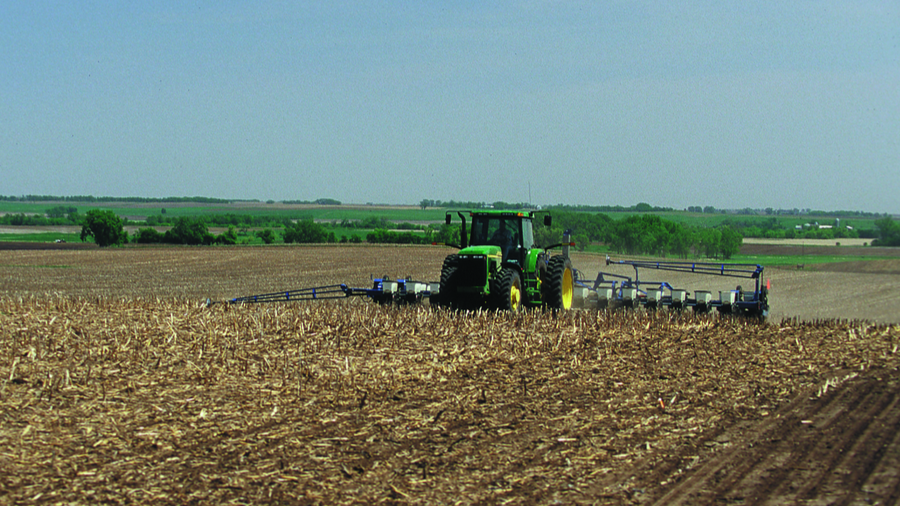
Photo: planting in eastern South Dakota, public domain, wikimedia commons
The South Dakota Standard is offered freely and is supported by our readers. We have no political or commercial sponsorship. If you'd like to help us continue our mission to advance independent political and social commentary, you can do so by clicking on the "Donate" button that's on the sidebar to your right.