
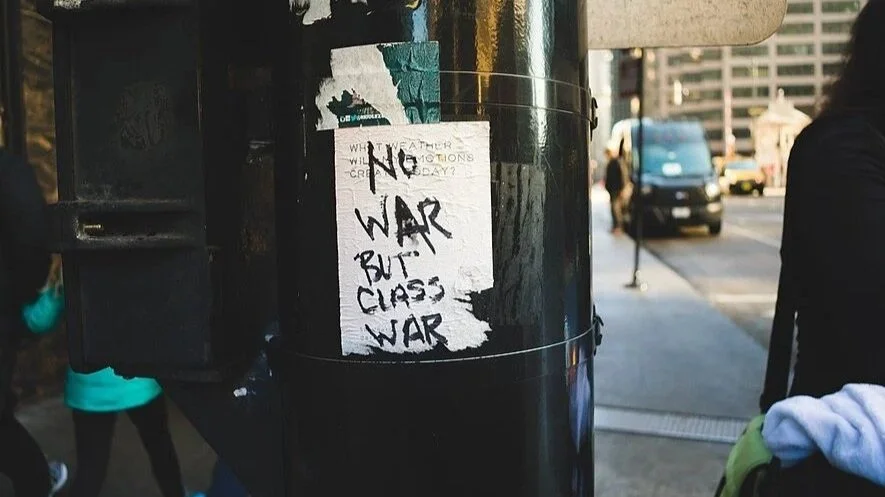
The rise of class warfare … and why the moneyed class is winning
The definition of conservative has changed dramatically over the last two decades. For centuries conservatism simply meant resistance to change—a desire to keep things as they are.
This was especially true of those upper classes whose life was better than others. They wished to keep it that way. Progressives desired change in a way that helped the classes not benefitting from the existing system.
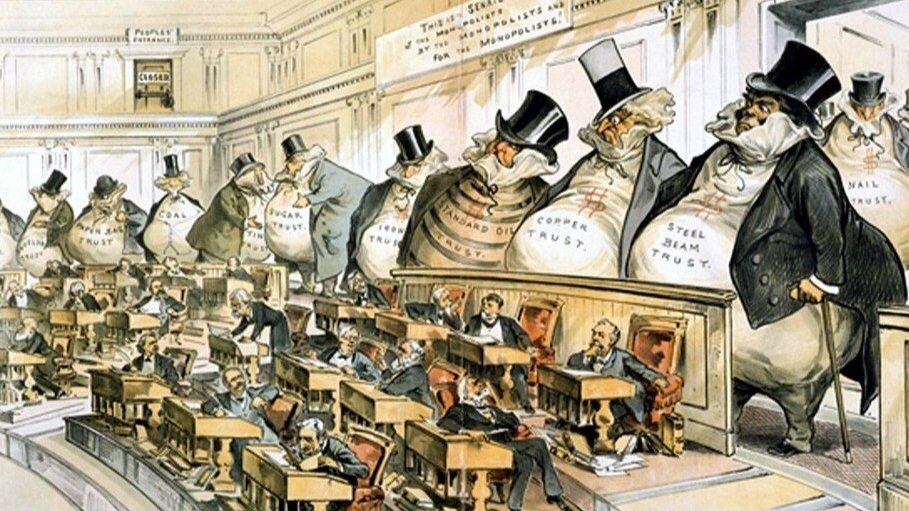
This is nothing new as there has always been a level of class warfare in every society.
There are two kinds of class war—economic and social. The struggle was relatively benign in the United States for centuries. Starting with the Emancipation Proclamation the social struggle became more pronounced. It was the southern wing of the Democratic Party that struggled to hold on to its privileges as the class who enjoyed a high social class status.
With the passage of the Civil Rights Act the southern white class lost much of its superior place in southern society. This strongly exacerbated the struggle with respect to race.
Because it was pushed by a Democratic president, LBJ, many southern whites switched to the Republican Party in the 1970s. Over the last half century that racial social war has not gone away, but has been vastly reduced in scope. Meanwhile, the economic struggle expanded. Under Theodore Roosevelt, the Republican Party became fairly progressive, initiating reforms designed to improve the lives of the working classes.
As the Twentieth Century moved forward, progressive initiatives started to shift to the Democratic Party with the New Deal and other progressive actions of Franklin Roosevelt. These lessened the economic class differential.
The struggle was still relatively benign until the 21st century. The emergence of the Tea Party wing of the Republican Party in 2010 saw an escalation in the economic classs struggle. Those who enjoyed a comfortable lifestyle resented their tax dollars being spent on those they deemed less deserving. Over the last two decades this feeling has grown into serious economic class warfare, with Democrats seeking to make the economic classes less separated and Republicans seeking to preserve the status quo and keep their money to themselves.
Over the preceding decades, progressive successes achieved by liberals — Social Security, Medicare, Medicaid, food stamps and a variety of other programs — helped the lower economic classes enjoy a higher standard of living. However, this was at the expense of the higher income classes who were understandably opposed. There have been constant conservative efforts to reduce Medicaid and food stamps, now called SNAP (Supplemental Nutrition Assistance Program) as well as school lunch and other programs.
In South Dakota the struggle has been shown in many actions. Recent examples are:
Sales tax on food. The legislature has had numerous bills to eliminate the sales tax on food. It has always been rejected because it would seriously reduce state revenues and might require a new source of revenue. An income tax has always been verboten. However, increased revenue from internet sales provided an opportunity to eliminate the sales tax on groceries. Even the Republican governor endorsed the idea. It would reduce costs an average of about $300 per year for a family of four. However this would be relatively equal among all economic classes, disproportionately benefiting the poor. The upper economic classes would not benefit proportionately; it was essentially progressive. This was unacceptable to the legislature and the legislature changed the bill to reduce the overall tax rate by 0.3%. This has the effect of giving more tax reduction to those who spend large amounts of money—businesses and high-income people. A person buying a $100,000 car, boat or machine would save $300 on one item alone. The high income classes won the war over the use of the increased internet sales revenue. The lower economic classes lost in this economic war.
Expanding Medicaid. In 2009 The Medicaid program was expanded to allow states to participate with 90% federal funds to expand Medicaid to the working poor who earned too much to qualify for Medicaid but did not have employer provided health insurance. This would have helped tens of thousands of South Dakotans struggling with day to day living. In economic terms only, the Republican legislature should have endorsed a 9:1 ratio—getting nine dollars for every dollar spent. But this money virtually all went to help the lowest income people in the state. The legislature defeated that bill every year. The money would be better spent on “economic development,” meaning making the wealthy even richer. Finally, the people adopted a constitutional amendment requiring the state to participate. The lower income classes won. However, the legislature did not accept this decision by the people. When the administration proposed reductions to federal funding of the program the legislature proposed its own constitutional amendment (Amendment I on the ballot) ending funding if federal funding is ever reduced. Since funding reduction is a certainty by this administration, passing Amendment I would effectively repeal the citizen-passed amendment. If Amendment I passes, the lower income classes will lose again.
Property tax relief. In 2026 the governor proposed a series of property tax relief measures designed to reduce the property tax on owner occupied residences. They all shift property taxes to sales taxes. All of these programs would give the largest tax relief to the highest income classes of people—distinctly regressive. The lower classes lose. Worse yet, the poorest people in the state rent. When the taxes on their apartment increase, their rent increases. They pay higher taxes and also pay the sales tax and get NO benefit. The poorest people in the state are paying increased sales taxes to pay the property taxes of the richest people in the state.
Pure economic class warfare sponsored by our legislature. From a purely practical standpoint, this makes perfect financial sense. Legislators are elected. And in the vast majority of cases, the candidate with the most money in their campaign chest wins the election and candidates must raise large amounts of money. This comes from people with large amounts of money, and their wishes then dominate the discussion of policy issues. Poor people don’t contribute to political campaigns. They can’t buy influence. If I’m a legislator and need to choose whether to support a large campaign contributor or support the poor, screw the poor.
It is also true at the national level. Congress funds trillions of dollars on wars. Those wars produce millions of veterans. While large portion of their war expenditures come back to them from military contractors, virtually none comes back from veterans. As a result, while trillions are spent on wars creating millions of additional veterans, there have been relatively small increases to the VA in support for veterans. Our Defense Department now spends a trillion dollars; the VA a third of that. (the Defense Department has been correctly renamed the War Department since our military hasn’t defended us from a foreign military invasion since 1812. There is a reason we are called veterans of FOREIGN wars!!)
The class conflict between supporting people at the lower end of the economic ladder and supporting money at the upper end seems to have become more exaggerated in recent decades, but has no obvious solution. Both federally and locally, the money class is winning the struggle. Like all political issues the pendulum seems to swing back and forth. For decades, national policy tended to swing toward helping the less fortunate. Nationally it seems to be swinging back. Locally, the chances of swinging back in the foreseeable future seem remote.
John Cunningham of Sioux Falls has spent his career in local government finance, including in Fulton County, Ga., and Atlanta. He has a master of public administration from Harvard and has done consultant work in four foreign countries.
Photo: public domain, wikimedia commons
The South Dakota Standard is offered freely and is supported by our readers. We have no political or commercial sponsorship. If you'd like to help us continue our mission to advance independent political and social commentary, you can do so by clicking on the "Donate" button that's on the sidebar to your right.