

Trump touts hope for good ag deals at summit. Markets aren’t so sure
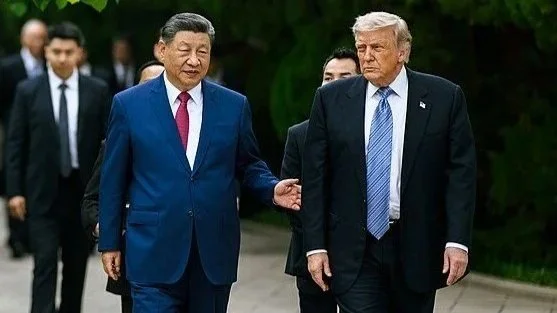
President Trump’s much-ballyhooed summit meeting with China’s president Xi Jinping ended with a lot of optimistic rhetoric, in general, but was very light on specifics.
For his part, Trump called it “an incredible visit,” and, of particular interest to farm states like South Dakota, said he made a deal for China to buy billions of dollars of soybeans.
You’d expect farmers and ag market traders to perk up and get somewhat bullish over a statement like that, but during the last few days, even as the summit was happening, soybean markets have gotten hit pretty hard by sellers.The selling affected both “old crop” (last season’s) beans, and “new crop” (this season’s) beans.
On the face of it, this seems contra-intuitive, but being an old hand at this racket (I was on the derivatives trading floor in Chicago for a decade and followed that up with another ten years of ag commodity brokerage in my office in Rapid City), I know something about the old adage “show me the money.”
Farmers and traders waiting for specifics should note that U.S. Trade Representative Jamieson Greer said, very vaguely after the summit, that the U.S expects to "see an agreement for double-digit billion purchases of ags over the next three years per year coming out of this visit."
Sounds nice, but to traders that’s just happy talk. It came without a commitment, much less the concrete deal traders expected. They didn’t get that, so they responded by taking the market down with a thud, ending the expectations rally that took place prior to the summit.
If and when China comes up with firm commitments and agreements, the markets should respond accordingly. Until then, we’ll see.
Meantime, on a global scale, soybean farmers – who last year lost an average of $75/acre – continue to wait for world market conditions to turn in their favor, which I doubt will happen even if the Chinese do come across with a significant commitment to buy American beans.
Brazil, which is now the world’s largest soybean producer, has added so much supply to the market that we are now living in a world that is overproducing soybeans. This is why I believe that China’s commitment to purchasing American soybeans may create a temporary aura of liquidity but won’t do much to change the price-constraining realities of supply and demand.
John Tsitrian is a businessman and writer from the Black Hills. He was a weekly columnist for the Rapid City Journal for 20 years. His articles and commentary have also appeared in The Los Angeles Times, The Denver Post and The Omaha World-Herald. Tsitrian served in the Marines for three years (1966-69), including a 13-month tour of duty as a radioman in Vietnam. Republish with permission.
Photo: public domain, wikimedia commons
The South Dakota Standard is offered freely and is supported by our readers. We have no political or commercial sponsorship. If you'd like to help us continue our mission to advance independent political and social commentary, you can do so by clicking on the "Donate" button that's on the sidebar to your right.
Follow us and comment on X and Bluesky



-20260515.jpg)