
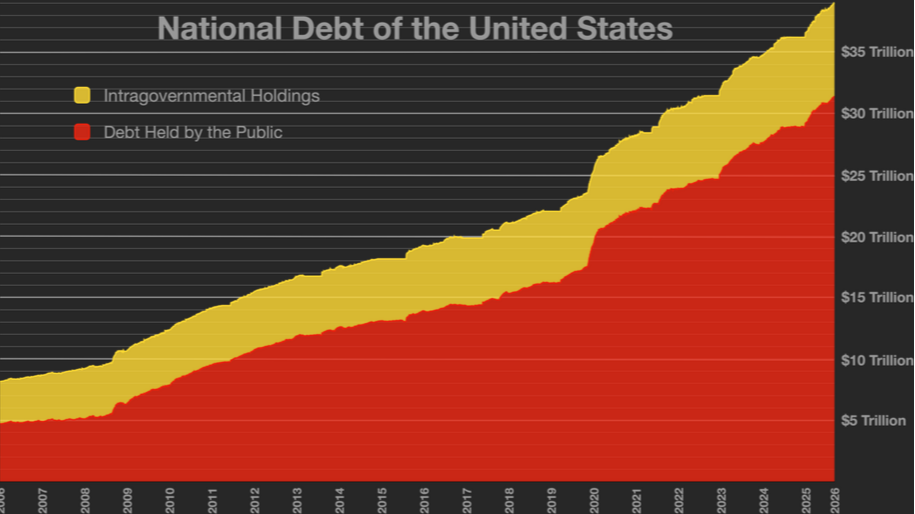
U.S. debt now exceeds our GDP. We owe more than we produce.
A representative of the Committee For a Responsible Budget just sent me an announcement of an eyecatching milestone, namely that total federal debt in this country “surpasses the size of the economy.” The news was reported in yesterday’s Wall Street Journal, which wrote that the debt is “crossing a once-unthinkable threshold, on the way toward breaking the record set in the wake of World War II.” WSJ added that this “is a potent symbol of the gathering fiscal stresses on the U.S.”
Here’s CFRB’s narrative on this “once unthinkable” news:
“At 100% of GDP, debt is roughly twice the historical average. Outside of a brief period early in the COVID-19 pandemic – when GDP temporarily crashed – debt only exceeded GDP for two years at the end of World War II. In the two decades that followed, the debt-to-GDP ratio was reduced dramatically to 34%. Today, debt is projected to reach 125% of GDP by 2036.
Today’s near-historic levels of debt were reported on by the Wall Street Journal, which pointed out that debt is projected to continue growing as the government spends $1.33 for every dollar of revenue it collects.
As Committee for a Responsible Federal Budget president Maya MacGuineas noted, “We’ve heard plenty of alarm bells in the past few years about our fiscal path, but this one rings especially loudly. The real question is whether or not our leaders in Washington will listen.
From our perspective here in South Dakota, where our state constitution mandates a balanced budget, the numbers are disquieting, disturbing … even downright scary.
Interest payments on the debt now amount to 17% of federal spending, and these are just interest payments – not paydowns on principal. The House of Representatives a year ago issued a report titled The Consequences of Debt, which listed inflation, higher interest rates and the risk of a fiscal crisis as potential consequences of a heavy debt load.
There’s an irony inherent to the report. The warning comes from the very body in our federal government, the House of Representatives, that exercises oversight of our nation’s fiscal activities and allows the debt to accrue in the first place. The House ignores its own warnings.
This is the kind of collectively compulsive behavior that has the potential for self-destruction.
Does anybody with the power to do something about this care?
John Tsitrian is a businessman and writer from the Black Hills. He was a weekly columnist for the Rapid City Journal for 20 years. His articles and commentary have also appeared in The Los Angeles Times, The Denver Post and The Omaha World-Herald. Tsitrian served in the Marines for three years (1966-69), including a 13-month tour of duty as a radioman in Vietnam. Republish with permission.
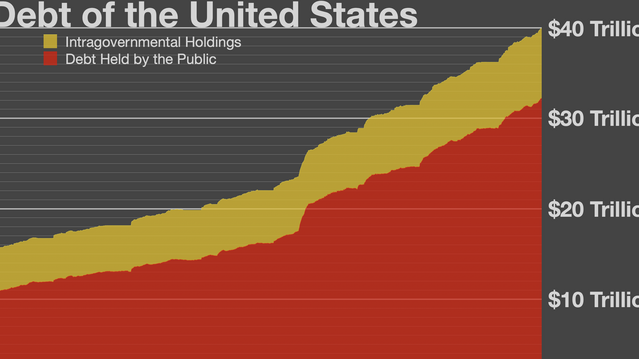
Graph: public domain, wikimedia commons
The South Dakota Standard is offered freely and is supported by our readers. We have no political or commercial sponsorship. If you'd like to help us continue our mission to advance independent political and social commentary, you can do so by clicking on the "Donate" button that's on the sidebar to your right.
Follow us and comment on X and Bluesky