
Vance’s dismissive take on Watergate reveals lack of character, morality
Vice President JD Vance has provided the country with a guiding touchstone on ethical principles for holding public office. A Golden Age of presidential success may be found, Vance suggests, in the presidency of Richard Nixon.
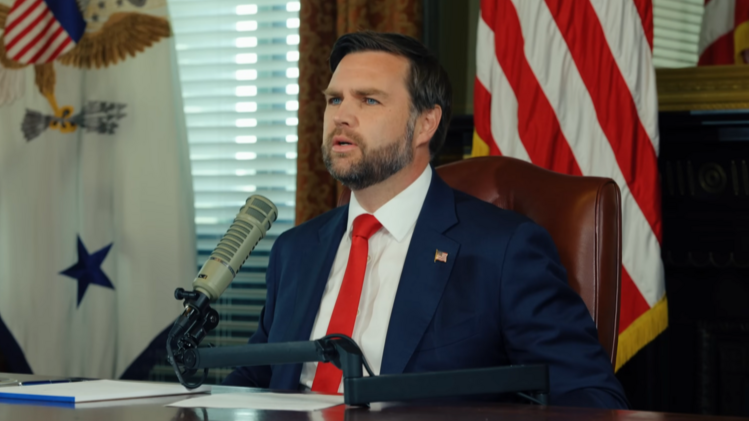
Vance, in an interview hosted by the Richard Nixon Foundation, stated that Nixon’s legacy is enjoying a deserved renaissance. The vice president also said. “If Watergate happened tomorrow, it would be like a 12-hour news story. Like, the idea that it would’ve taken down a presidency is crazy.”
Vance asserts that Nixon was taken down because of a deep state rather than because of the then-existing constitutional and legal system used by political leaders of both political parties who challenged Richard Nixon’s presidency.
The “deep state” that the vice president attributes to the Nixon resignation, and related criminal prosecutions, consisted of prominent members of the Republican Party. Republican Sen. Howard Baker (a Nixon ally who originally thought the allegations could not be true) and all of his fellow Republicans on the Senate investigating committee voted unanimously with Democrats to subpoena Nixon’s secret audio tapes. Fred Thompson, the Republican counsel to the Senate Watergate Committee, later said, “… it was inconceivable to me that the White House could withhold the tapes once their existence was made known.”
Republican Sen. Barry Goldwater later said, “He was the most dishonest individual I ever met in my life. President Nixon lied to his wife, his family, his friends, longtime colleagues in the U.S. Congress, lifetime members of his own political party, the American people and the world.”
The “deep state” in Vance’s interpretation of history includes the then Republican-appointed judiciary. Nixon’s chief of staff, his White House counsel, and his assistant to the president for domestic affairs were each convicted of Watergate-related crimes by a Republican-appointed judge.
There are things to be admired about President Nixon, but not his criminality. When I was a kid, my father introduced me to Nixon while he was running for the presidency. I have since been a student of Nixon’s history. I was also fortunate enough, early in my law school education, to be a clerk in the state’s attorney’s office because of one of the agencies Nixon created — the Law Enforcement Assistance Administration.
Presidential historian Theodore White discussed Nixon’s thinking and strategy concerning the Watergate investigation in his book “Breach of Faith.” Approximately one year before Nixon resigned, White noted that, “He [Nixon] is still confident that no evidence can be brought against him and his inner circle because no one else knows of the [White House] tapes, and they will be forever protected by executive privilege. His mind is thus not focused on his real problem — the fact that two separate crimes have been committed. The first was a third-rate break-in and burglary, but the second, more serious, is the continuing action by the president to prevent the law from pursuing and bringing to justice the authors of the first crime. ... That weekend, however, the distinction between these two separate crimes and their importance began to be thrust on the president, for now a third and critical pressure would be added which must involve him personally: blackmail.” (p. 198)
Both the Senate and House investigated the Watergate matter. The House Judiciary Committee, during its investigation, considered several articles of impeachment against Nixon. Three of the articles passed the committee and were recommended to the House as a part of a formal impeachment procedure: Article I — Obstruction of Justice (Article I was based on, among other allegations, paying hush money to burglars, making false statements to investigators, withholding evidence, and interfering with the CIA and FBI); Article II — Abuse of Power; Article III — Contempt of Congress.
An impeachment hearing by the full House did not happen. Nixon resigned from the presidency on Aug. 9, 1974.
About one month after his resignation, President Gerald Ford pardoned Nixon of all possible federal crimes he may have committed while serving as president. I have been asked whether the acceptance of a presidential pardon is an admission of guilt. It is not.
Nixon never admitted guilt. His limited acknowledgement of the matter was, “I let down my friends. I let down the country. I let down our system of government, and the dreams of all those young people that ought to get into government but now think it too corrupt. Yep. I let the American people down, and I have to carry that burden with me the rest of my life.”
Does this statement describe the principles one should hold while in public office?
For Vice President Vance to praise a president who resigned rather than face an impeachment and trial in the U.S. Senate, and to dismiss as innocuous Nixon’s behavior while president, is suggestive of the vice president’s view on how an administration might operate.
Considering a model of behavior based on a political leader is a serious affair. To do this, one must study their thoughts, their acts while wielding power, their behavior and principles, and only then determine if that person should be held as a role model.
David Ganje is an attorney who practices natural resources, environmental and commercial law. His website is lexenergy.net. Ganje acknowledges the assistance of Sebastian Oliveros in the preparation of this piece.
Photo: public domain, wikimedia commons
The South Dakota Standard is offered freely and is supported by our readers. We have no political or commercial sponsorship. If you'd like to help us continue our mission to advance independent political and social commentary, you can do so by clicking on the "Donate" button that's on the sidebar to your right.
Follow us and comment on X and Bluesky