
Want a boost? Listen to Harry Chapin’s “Taxi” … and so many others
Harry Chapin’s music still gives me a lift.
Which makes the boost I gave him mean even more to me. Chapin, a celebrated songwriter and singer, has been dead for 45 years, but he and his music haven’t been forgotten.
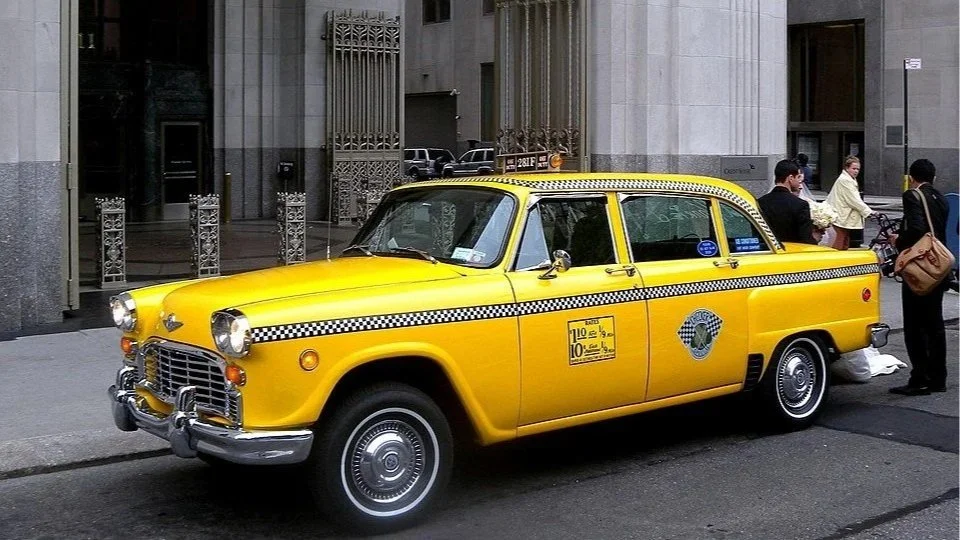
You know some of his most popular songs: “Taxi,” the tale of an aimless man driving a cab and his encounter with a lost love; “Cat’s in the Cradle,” about a father too busy for his son — and the lesson both learned from that, and “W.O.L.D,” the story of a morning disc jockey who sadly accepted what his life had become because of the choices he had made.
Chapin wrote mini-dramas, funny tunes, love songs and political pieces. He performed with an acoustic guitar and, at times, a small band. He had songs on the charts, was regularly featured on Johnny Carson’s “Tonight Show” — including appearances on consecutive nights in 1972 because of public demand — and toured extensively.
But about that boost: Chapin and his band were performing at South Dakota State University on Monday, April 30, 1979. I was the arts editor at the school paper, The SDSU Collegian, and covered the concert.
I tried to obtain a pre-show interview, but Chapin, a tall man with an unruly mop of hair, told me he did not have time for it. Let’s do it after the show, he said.
What a show it was.
Chapin had the crowd singing along, laughing one moment, quiet and focused the next.
It was a masterful performance, capped for me and many others by his performance of “30,000 Pounds of Bananas,” an uproariously enjoyable song about, amazingly, a tragic truck accident in Scranton, Pa., in 1965, involving that amount of smashed fruit.
It was an ominous foreshadowing, since Harry died in a car crash on July 16, 1981. He was just 38, and left behind five kids with his wife Sandy, a talented songwriter, poet and activist, as well as millions of friends and fans including Bruce Springsteen, Billy Joel and others who admired his dedication and his music. Harry had planned to perform at — what else? — a benefit concert that night.
When we met, I called him Mr. Chapin, but he waved that off.
“Call me Harry,” he said with a smile.
Harry was successful, his music often on the radio. He sang on many network programs, but he was far from wealthy. Half his 200 or so shows a year were benefits, a fact that was spotlighted in the 2020 documentary, “Harry Chapin: When in Doubt, Do Something.”
“I play one night for myself and one night for the other guy,” he often said.
His wife accepted his refusal to pile up hit singles and cash, even as record sales and concert earnings brought in a reported $2 million annually.
“Harry was supporting 17 relatives, 14 associations, seven foundations and 82 charities,” she said. “He always said, ‘Money is for people,’ so he gave it away.”
In 1977, President Jimmy Carter named Harry to the Presidential Commission on World Hunger. Unsurprising, he was the only board member who never missed a meeting.
I have vivid memories of the night I met him almost 45 years ago. We started the interview at The Barn, the great old gym on the SDSU campus that he had packed with fans, and continued it in a small car with three other men as we drove to the Brookings Airport.
I lived by the airport as a kid, and knew it would be closed by the time we got there, but two of the men in the car, who turned out to be his pilots, said that would not be a concern.
The airport was dark when we pulled up, but the pilots hopped the fence and hustled to a small plane. Harry and I kept talking, focusing on his organization, World Hunger Year, now called WhyHunger.
“Every year,” he said, “is World Hunger Year.”
A lot of people needed our help. Harry was doing all he could, and he lobbied Congress, including meeting with Sen. George McGovern, a longtime advocate for feeding hungry people.
My interview wasn’t the usual discussion with a musician, and it was very memorable. Harry was intense and animated, and I had the sense to shut up and listen.
But soon, far too soon, it was time for him to go. His plane had warmed up and he needed to head to the next show in the next town. First, however, he had to get on the runway. When we got to the chain-link fence, I cupped my hands, Harry inserted his foot and up and over he went. He waved and his lanky legs carried him to the plane.
The next time I heard his name mentioned on the news was July 16, 1981. Chapin was killed in a car accident; he may have had a heart attack before a truck slammed into his Volkswagen.
His music, and devotion to fighting world hunger, lived on. His agent, Ken Kragen, worked with other clients to create “We Are the World,” U.S.A. for Africa, the Live Aid concerts and Hands Across America.
On Dec. 7, 1987, which would have been his 45th birthday, Harry was posthumously awarded the Congressional Gold Medal of Honor. It was a rare honor for a musician, and one he richly deserved.
That’s a wonderful legacy, sure to make Harry break out one of those great smiles. His music still does for millions of his fans, including one who was lucky to share a ride and a conversation with him back in 1979.
If you want to support Harry’s cause, you can donate in his name to the Harry Chapin Foundation. Its motto: “When in doubt, do something.”
https://harrychapinfoundation.org
That might just give you a boost.
Fourth-generation South Dakotan Tom Lawrence has written for several newspapers and websites in South Dakota and other states for four decades. He has contributed to The New York Times, NPR, The London Telegraph, The Daily Beast and other media outlets. Do not republish without permission.
Photo: public domain, wikimedia commons
The South Dakota Standard is offered freely and is supported by our readers. We have no political or commercial sponsorship. If you'd like to help us continue our mission to advance independent political and social commentary, you can do so by clicking on the "Donate" button that's on the sidebar to your right.
Follow us and comment on X and Bluesky