

Financial advisor Kahler on war, oil and stock markets, and your investment fears as conflict in Iran rages
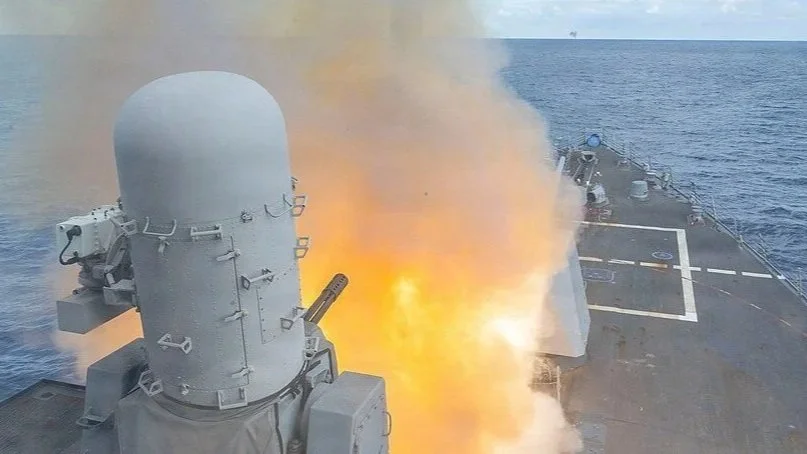
War with Iran is adding a new level of chaos to already uncertain times. What about your retirement savings? Is your investment portfolio safe? Is it time to think about pulling out of the stock market?
If you’re asking yourself questions like these, please pause and take a few deep breaths. Then put down the phone before you call your investment advisor. Or back away from the computer before you access your investment account. This is not the time to take dramatic action out of panic.
Some pundits are already making comparisons to the 2003 invasion of Iraq by the US or Russia’s “special military operation” attack on Ukraine in 2022. They suggest that the current war, like those conflicts, could last for years rather than weeks or months. That comparison adds weight to the uncertainty of the moment. When we hear, not only that we are at war, but that we may be at war for a long time, anxiety is a natural reaction.
A protective voice inside you may be saying, “Get out now.” It may urge you to move your investments to cash and wait for certainty. Another voice may urge you to ignore the news entirely, saying “Markets always recover. Don’t worry about it.”
Both voices are trying to keep you safe. One sees safety as holding onto what you have by stashing your assets in the bank. The other sees safety as shutting down your anxiety and even pretending everything will be okay. Both reactions are normal. It’s not optimum, though, if either extreme controls your financial decisions.
Economic markets react quickly to new risks. But they do not run on fear alone, they focus on long-term economic output. If factories stay open, trade continues, and companies keep earning profits, markets adjust and move forward.
Think back to the Iraq war. Markets moved sharply at times. Oil prices spiked. There were times of deep uncertainty. Yet over the full span of that conflict, the U.S. economy continued to grow. Businesses continued to operate. Long-term investors who stayed disciplined were not destroyed.
There is another factor in this moment: unpredictability. The Trump administration has shown that tone and policy can change quickly. That back-and-forth can feel unstable.
Markets have largely learned to live with that pattern. When leadership seems unpredictable, investors build that risk into prices. When clarity improves, prices adjust again. This is not calm in an emotional sense but adaptation in a financial sense.
A strong, diversified financial plan is built with uncertainty in mind. Markets shift, prices rise and fall, leaders come and go. Nations negotiate, shift alliances, even go to war. These events are not rare interruptions. They are part of history. If your investment strategy only works when the world is stable, it is not a durable strategy.
Wartime calls for seriousness and staying informed. Feelings like fear and anger are normal and appropriate responses for anyone concerned about the human suffering and cost of any war. They might lead to compassionate actions such as contacting politicians or donating to charities.
These emotions are less helpful when it comes to our finances. Volatility is uncomfortable. The anxiety
around uncertainty can make us want to jump into action. But emotion-driven actions, especially extreme ones like getting out of the market, are likely to cause more damage to your long-term financial health than any external events will do.
In chaotic times like these, when we don’t know what might happen, acting out of panic is likely to make things worse. The simplest—though not easiest—investment strategy is to keep breathing and focus on the longer term.
Rick Kahler, CFP, is a fee-only financial planner and financial therapist with a nationwide practice, Kahler Financial Group, based in Rapid City. His co-authored books include “Coupleship Inc.” and “The Financial Wisdom of Ebenezer Scrooge.”
The information provided is for educational purposes only and should not be construed as investment advice. The views expressed are subject to change based on market or economic conditions. Past performance is not indicative of future results. Any reference to potential benefits is illustrative and may not apply to your individual circumstances. You should consult with your financial adviser before making any investment decisions. KFG, LLC is an SEC-registered investment adviser.
Photo: oil tankers loading in the Arabian Gulf, public domain, wikimedia commons
The South Dakota Standard is offered freely and is supported by our readers. We have no political or commercial sponsorship. If you'd like to help us continue our mission to advance independent political and social commentary, you can do so by clicking on the "Donate" button that's on the sidebar to your right.
Follow us and comment on X and Bluesky