

Why artificial intelligence can’t replace your financial planner
What is a financial planner worth when anyone can get a plan from ChatGPT? A student asked this question during a recent video call with the Wealth Management Society at Brigham Young University–Idaho. Here is my answer.
AI can already read financial documents, run a tax analysis, and estimate how long retirement savings may last. It is getting good at supplying answers that can help build a sound technical plan. I expect more people to arrive at a planner’s office having done much of that work themselves, so the conversation can start at a higher level.
Yet the logical answers AI gives are of limited value in making money decisions, which are seldom made on logic alone. Stanford marketing professor Baba Shiv has suggested that 90 to 95 percent of our decisions are shaped by emotion without our being aware of it. If money decisions were logical, nobody would overspend, everyone would live within a budget, and every worker would be saving for retirement.
People who are stuck on a money decision usually do not need another answer. They need someone to listen long enough for them to reach their own answer. In my early years as a financial planner, I was the advice and answer man. I couldn’t see why anyone would turn down my logical and correct advice. I learned, painfully, to shut up until it was time to give advice, and then to ask permission first.
For example, a client in my financial therapy practice came in for a recent session stuck on a decision between three options I will call A, B, and C. Almost immediately, I thought B was the answer. Instead of saying so, I got curious and asked questions, and we spent the whole hour looking at what each option meant to her. At the end she said, “I think the answer is B for me.”
I could have given her that answer right away, which is what a chatbot might have done. In my experience, though, people are far more likely to act on an answer they reach themselves than on one someone hands them.
My intent is not to discourage anyone from using AI with their money. I use it to manage my calendar and email and to analyze my financial documents, and I’m often amazed at what it finds.
Here are my suggestions for using AI with your finances:
If you are researching a financial decision, use AI as a research tool. I do this before medical appointments. I arrive better informed, and my doctor and I can have a more useful conversation. However, I am not naive enough to act on what AI tells me without first consulting a medical professional.
If you are about to make a large or hard-to-reverse decision, such as rolling over a 401(k) or deciding how much you can safely spend in retirement, have a professional look at your situation first. AI offers confident, specific answers that carry no accountability, and it can be right most of the time and still be wrong on a detail that is costly to miss.
If you already know what you should do and are not doing it, an AI answer is unlikely to help. Look for a planner or financial therapist who listens and asks questions first, and who asks permission before giving advice.
AI is an evolving tool, not a magic source of instant answers. I strongly recommend that you let AI help do the research. Then bring that research to a professional advisor who will help you find solutions and strategies that are the best fit for you.
Rick Kahler, CFP®, CFT™, is a pioneer in financial therapy and a 2026 inductee into the Financial Therapy Hall of Fame. He is the founder of The Financial Therapy Podcast and Kahler Financial Group, and co-author of “Coupleship Inc.” and “The Financial Wisdom of Ebenezer Scrooge.
The information provided is for educational purposes only and should not be construed as investment advice. The views expressed are subject to change based on market or economic conditions. Past performance is not indicative of future results. Any reference to potential benefits is illustrative and may not apply to your individual circumstances. You should consult with your financial adviser before making any investment decisions. KFG, LLC is an SEC-registered Investment Adviser.
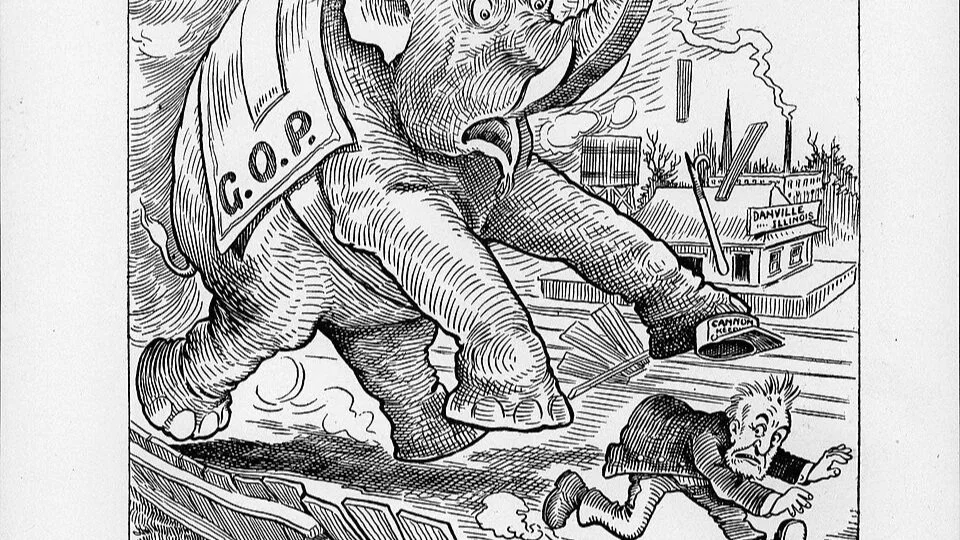
Photo: public domain, wikimedia commons
The South Dakota Standard is offered freely and is supported by our readers. We have no political or commercial sponsorship. If you'd like to help us continue our mission to advance independent political and social commentary, you can do so by clicking on the "Donate" button that's on the sidebar to your right.