
Ukraine war rattles farmers, puts world food supply at risk
In the past week, Ukraine blew up a Russian warship docked in Libya and hit a Russian cargo ship with drones in the Gulf of Finland, escalating and extending their war with Russia into the Baltic and Mediterranean seas.
President Trump, who once boasted that he could end the war in one day, now stands helplessly by as the fighting rages and hundreds of thousands of troops have died.
It’s tragic … and it’s inevitable that the cost of the war in blood for the combatants also carries costs that are measured in terms of human suffering elsewhere.
There are no innocent bystanders.
The Council on Foreign Relations warns that “recent escalation in the Russia-Ukraine war has halted the Black Sea grain trade and metastasized into a war on the global food system. Combined with drought in the Northern Hemisphere, a looming super El Niño, and persistent instability in the Middle East—the world is on the verge of a crisis that could erase years of progress in reducing global hunger and push millions into acute food insecurity.”
Here in South Dakota, our entire ag economy is standing by and waiting for the ramifications that will materialize if fighting in the seas of Europe turns crucial shipping lanes into bottlenecks that hamper grain and fertilizer shipments from the combatants.
The stakes are huge.
Ukraine ranks #5 among the world’s wheat exporters, accounting for 9% of global exports. The country’s rankings for corn are #4 and 12%, respectively.
Russia is the world’s leading wheat exporter. It too has historically used its outlets into the Black Sea to ship grain, but since the war with Ukraine has put that route at risk, Russia has been moving its grain through northern ports. Last week’s Ukrainian drone strike to the north, in the Gulf of Finland, may be an indication that Ukraine can interfere with Russian shipments from the north.
And it’s not just grain shipments that are at risk. Fertilizer is a big part of this picture.
The inevitable increase in grain prices should a major escalation of the war materialize would be offset by a surge in fertilizer prices, which have already been inflated by the U.S. war against Iran. Up to now, Russia, being the world’s largest exporter of fertilizer, has been able to shift much of its fertilizer exports to its northern ports, but Ukraine’s attack on that cargo ship in the Baltic Sea is effectively a statement that shipping from those ports could be endangered.
This thing could get messier. Farmers, who should be prepared for anything, can find hedging mechanisms that will take substantial risk out of market swings as the geo-political news ebbs and flows along with the bloody tides of the Baltic, the Black and now the Mediterranean seas.
John Tsitrian is a businessman and writer from the Black Hills. He was a weekly columnist for the Rapid City Journal for 20 years. His articles and commentary have also appeared in The Los Angeles Times, The Denver Post and The Omaha World-Herald. Tsitrian served in the Marines for three years (1966-69), including a 13-month tour of duty as a radioman in Vietnam. Republish with permission.
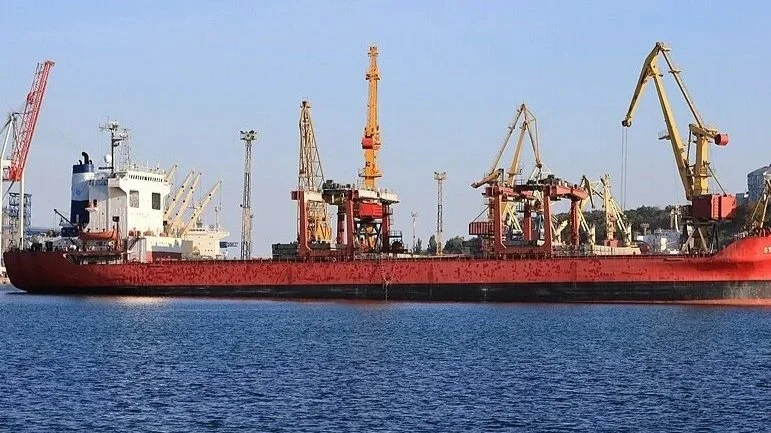
Photo: Ukrainian cargo ship in Odessa, public domain, wikimedia commons
The South Dakota Standard is offered freely and is supported by our readers. We have no political or commercial sponsorship. If you'd like to help us continue our mission to advance independent political and social commentary, you can do so by clicking on the "Donate" button that's on the sidebar to your right.