
Trump is helping farmers with a one-time $12 billion payment, but it’s a temporary fix. Long term solutions are needed
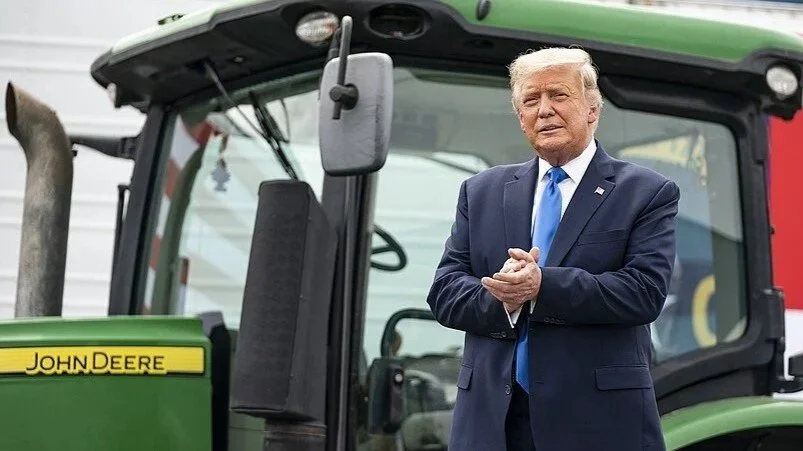
The key words are “one-time.” As in, President Trump announced $12 billion in one-time payments to farmers on Monday, Dec. 8.
We can only hope that is an accurate description.
Farmers have had a rough few years, with commodity prices slumping and input costs rising. When Trump imposed heavy tariffs on many countries, some responded by closing their doors to American products, including soybeans and other crops.
The result was, farmers suffered. China had consistently been our top customer for soybeans, but it refused to buy any for months. American farmers, already struggling, faced deep financial trouble, even ruin in some cases.
Trump has decided to give $12 billion to them to try to ease the pain. Most, $11 billion, will go to row-crop producers, which will help soybean and corn growers. The money will be disbursed by Feb. 28, with the remaining $1 billion planned for farmers who raise fruits, vegetables and other crops.
Trump said he is relying on tariffs to encourage Americans to spend more money on products produced here while reducing the trade deficit. They also could lead to more companies returning to the US rather than paying the extra cost.
Will it work? So far, the results don’t look promising. While Trump announced in late October that China will purchase 12 metric tons of soybeans by the end of the year, it has not reached that level yet. Companies are paying more for raw materials and are passing the added costs to consumers.
On the plus side, the federal government has raked in $200 billion, an impressive amount. The president has said he hopes to replace income taxes with tariff revenue, but income taxes totaled $2.66 trillion. Trump also wants to use these new funds to reduce the national debt — a worthy goal. He has floated the idea of issuing $2,000 checks to most Americans.
But first, he wants to help farmers — and score some political points.
“What we’re doing is we’re taking a relatively small portion of that, and we’re going to be giving and providing it to the farmers in economic assistance. And we love our farmers,” he said. “And as you know, the farmers like me, because, you know, based on, based on voting trends, you could call it voting trends or anything else, but they’re great people.”
I agree that farmers are “great people,” and it is true that most are still supportive of Trump. He has said tariffs will cause temporary pain with long-term gains to follow, and many farmers are willing to wait for that.
https://www.bbc.com/news/articles/cjedvwed1xgo
But for how long? I talk to a lot of farmers on a regular basis. They still express support for Trump, and believe he can do great things for them. But if the farm economy continues to slip, that might change.
Democrats need to do more to reach out to farmers. They used to have a strong rural segment, but that has changed over recent decades. South Dakota, which elected George McGovern, Tom Daschle, Tim Johnson and other Democrats who were strong agriculture supporters, now is almost completely red. No Democrat has won a statewide election since 2008.
The $12 billion is coming from the USDA’s Commodity Credit Corporation, which Trump tapped for about $23 billion in his first term to assist farmers. Many said they were uncomfortable taking these payments, but saw few options if they wanted to survive.
They were willing to do so once, but here we are again, with farmers again relying on the federal government to help them survive. It’s become more than a one-time thing. This year, farmers will receive about $40 billion in relief payments.
It won’t be enough to prevent the farm economy from taking another steep dip in 2026: the Food and Agricultural Policy Research Institute at the University of Missouri estimates net farm income will decline by $30 billion in 2026.
These payments won’t solve the problem American farmers face, as Ryan Loy, assistant professor and extension economist for the University of Arkansas Division of Agriculture, explained to Fortune.
“We’re talking $12 billion, and while it is a lot of money, in the grand scheme of things, it’s still going to be a Band-Aid on a bigger wound,” Loy said. “How can we triage this situation right now, work on that longer-term solution? That’s really, I think, the overall attitude toward it.”
The real solution is a healthy market, with American producers allowed to compete with global producers in a fair and open manner. We need increased diversity and efficiency in agriculture. Sustainable practices with conservation and innovative strategies are a must. Crop insurance must be strengthened and young farmers given a hand up to acquire ownership.
These steps will do a lot more than a one-time windfall. That’s the best solution for farmers and for the country.
Fourth-generation South Dakotan Tom Lawrence has written for several newspapers and websites in South Dakota and other states for four decades. He has contributed to The New York Times, NPR, The London Telegraph, The Daily Beast and other media outlets. Do not republish without permission.
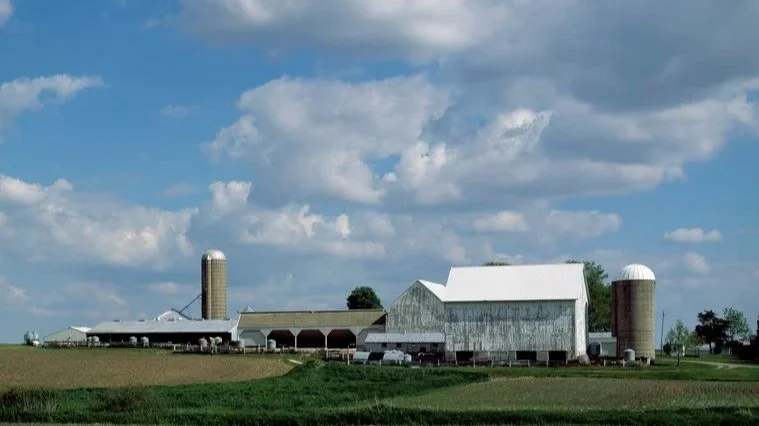
Photo: South Dakota farm, public domain, wikimedia commons
The South Dakota Standard is offered freely and is supported by our readers. We have no political or commercial sponsorship. If you'd like to help us continue our mission to advance independent political and social commentary, you can do so by clicking on the "Donate" button that's on the sidebar to your right.