

The USDA’s plan to rescind the Roadless Rule on Forest Service land places 45 million acres of wilderness land at risk
It’s worth paying attention to this — 44.7 million acres of national wilderness areas are at risk.
The federal Roadless Rule covering lands under the stewardship of the United States government was adopted in 2001. This rule prohibits most road construction, road reconstruction (the relevant lands already had some roads at the time the rule was passed), and timber harvesting within particular Forest Service areas.
After undergoing a lengthy review and notice process, the National Forest Service adopted this federal administrative rule. These maps provide a good picture of the rule’s coverage areas.
The newly appointed U.S. Department of Agriculture secretary under President Trump, Brooke L. Rollins, announced in early 2025 that getting rid of the rule would allow for better management of wildfire risk, boost local timber economies, and eliminate “overcomplicated, burdensome barriers that hamper American business and innovation.”
“Once again, President Trump is removing absurd obstacles to common-sense management of our natural resources by rescinding the overly restrictive Roadless Rule,” Rollins said.
Thirty-eight states plus Puerto Rico would be affected by the rule’s rescission. Several steps must still be taken before the rule can be rescinded. One of the objectives of the proposed rescission is to grant decision-making for road construction, road reconstruction, and timber harvesting to local officials.
The Roadless Rule is one of the most significant federal regulations governing public land conservation. The current administration, however, argues that some of the protected lands are in danger and that the lands are “unable to be properly managed for fire risk.”
In discussing the administration’s proposed rescission of the rule, Secretary Rollins announced in June that, “This move opens a new era of consistency and sustainability for our nation’s forests. It is abundantly clear that properly managing our forests preserves them from devastating fires and allows future generations of Americans to enjoy and reap the benefits of this great land.”
The 2001 rule covers, and any possible rescission of the rule would affect, approximately 44.7 million acres of National Forest System lands. The “abundantly clear” fire risk argument, one of the central points in favor of rescinding the rule, is discussed below.
Establishment in the U.S. of National Forest lands began in 1891. These government set-aside lands were originally called forest reserves until the name was changed by Congress under a subsequent statute to be thereafter identified as National Forests.
In the early stages of National Forest history, Presidents Harrison, Cleveland, McKinley, and Theodore Roosevelt placed 200 million acres of land under federal forest stewardship. While Roosevelt was not an “environmentalist” in the modern sense of the word, he nonetheless advocated for the federal government as the steward of natural resource conservation. The presidents mentioned added the acreage as new public lands to address a growing public appreciation for wild places and species.
Roosevelt said the country’s natural resources were not inexhaustible. The historic efforts by the presidents mentioned (not all in the same political party) and the subsequent efforts by way of legislation and rulemaking will be darkened by the proposed cancellation of the rule.
The winding history of the Roadless Rule has not been smooth. After efforts to reinterpret or change the rule, along with active litigation including two unsuccessful attempts appealed to the U.S. Supreme Court, it remains in effect. But the rule is now subject to one of the most sweeping attempts at rule nullification of any environmental rule in my lifetime.
The National Forests are public lands “owned” by the citizens of the United States and are to be managed under the stewardship of the federal government.
A recent University of Wyoming article reviews the proposed rule cancellation. Fire prevention has been, and always will be, a long-term issue for the nation’s forests. The text of the university article mentions fires and wildfire 27 times.
A subtopic within the article is called “More Fire, Less Management.” The article includes comments from a 2025 American Forest Resource Council newsletter showcasing an administration official who states, “Instead of protecting our forests, the rule has trapped them in a cycle of neglect and devastation.”
The official noted that more than 8 million acres of Roadless Areas have burned since the rule was enacted, with annual wildfire losses doubling over the same period. What is the supporting data for this statement? Where is the evidence for the cause and effect between the Roadless Rule and the described fires? Where does the article or newsletter point to an academic or government report analyzing the implied relationship of the rule to fires on 8 million acres of roadless lands?
Neither the article nor the cited newsletter provides evidence supporting the claims of neglect and devastation.
A 2020 USDA Forest Service letter report using some 26 references and sources was written on the subject. The title of the report is Long-term Forest Health Implications of roadlessness.
The report concluded, “Historical fire maps indicate that forests with and without roads have burned at similar rates since the [Roadless] rule took effect. The apparent neutrality of roads with respect to fire occurrence may be due to higher rates of human-caused ignition near roads offsetting advantages related to more agile positioning of fire-fighting assets.” This conclusion contradicts USDA assertions found in the written proposed notice of the agency’s intent to rescind the rule. On June 12, at the time of the president’s announcement proposing to rescind the Roadless Rule, he issued a separate executive order. Executive Order 14308 (Empowering Commonsense Wildfire Prevention and Response) directs various agencies to perform tasks concerning wildfire prevention and response. At the same time, the several directives in the executive order clearly disclose to the public what has not been done by the federal government regarding wildfire prevention and response.
The EO requires agencies to develop a comprehensive technology roadmap to increase wildfire firefighting capabilities at the state and local levels, including artificial intelligence, data sharing, innovative modeling and mapping capabilities, and technology to identify wildland fire ignitions and weather forecasts to help with response and evacuation. The EO also directs the federal government to identify, declassify, and make publicly available historical satellite datasets that will advance wildfire prevention and response and improve wildfire prediction and evaluation models.
And in relevant part, the EO further directs the federal government to develop performance metrics for wildfire response, including metrics related to average response times, annual fuels treatments, safety and cost-effectiveness, and other subjects, for inclusion in strategic and annual performance plans.
If the preceding EO directives were part of established federal wilderness management policies, the wildfire prevention and response directives would not be needed. Considering the new not-yet-completed directives in the EO concerning wildfire prevention and response, how do proponents of Roadless Rule rescission, and indeed how can the USDA, declare to the country that the existing rule should be rescinded because the rule is causing or exacerbating the risk of wildfires?
The view of history will be wider and longer than the urgent desire of the current administration to open the development of natural resources to the detriment of the people. The pending nearly wholesale process of eliminating the Rule is baffling. In this matter, the USDA is acting as the Ticketmaster of moral rectitude under its vision of the nation’s natural resources.
I am reminded of the Lewis Carroll statement, “Execution first, judgment later.”
The Roadless Rule took about 15 months to finalize. The 2001 final rule was based on and refers to a four-volume final environmental impact statement and a project record which considered evidence for and against the rule. Based on court precedent, the burden of proof in favor of rescinding it lies with the USDA in the pending proceedings.
The actions of the USDA and the Forest Service in removing or eliminating the rule require federal agencies to examine the relevant data and articulate a satisfactory explanation for a rescission of the rule. A government agency, in the course of rulemaking or rule-canceling, must show a rational connection between the facts found and the choices made.
In rescinding existing administrative rules, court standards direct that “unexplained inconsistency” is not permissible. In practical effect, court precedent says, “Well, this rule has been around for a while and has seen its challenges, so acts to cancel the rule require an understandable and supportable explanation.”
As matters stand, the arguments for cancellation of the Rule submitted in the record and in the various public statements supporting cancellation do not answer the government’s announced assignment.
“Speculation that eliminating road prohibitions would improve forest health is not supported by nearly 20 years of monitoring data,” states the USDA 2020 letter.
David Ganje is an attorney who practices natural resources, environmental and commercial law. He is a regular contributor to The South Dakota Standard. His website is lexenergy.net.
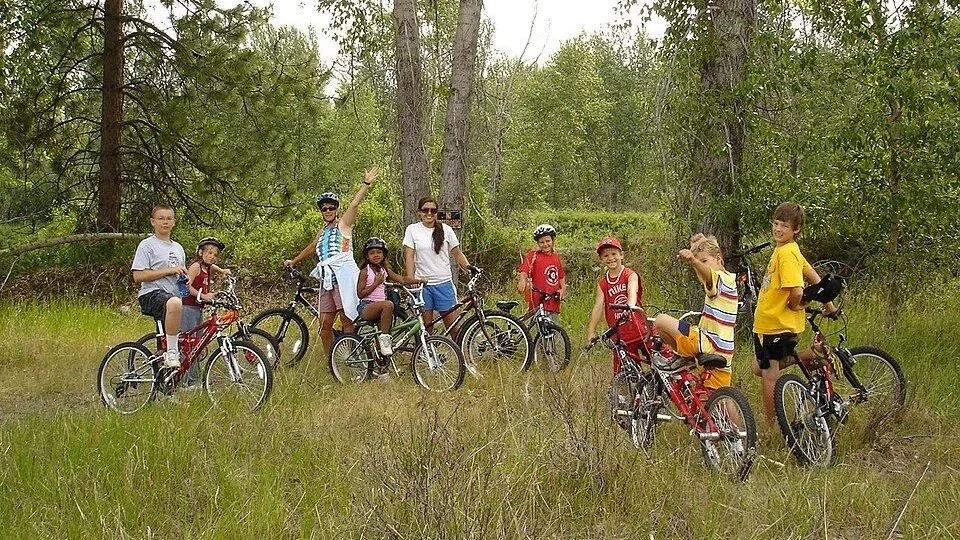
Photo: Bikers in a National Forest, public domain, wikimedia commons
The South Dakota Standard is offered freely and is supported by our readers. We have no political or commercial sponsorship. If you'd like to help us continue our mission to advance independent political and social commentary, you can do so by clicking on the "Donate" button that's on the sidebar to your right.




.jpg)