
How Fed interest rate increases could raise your household debt
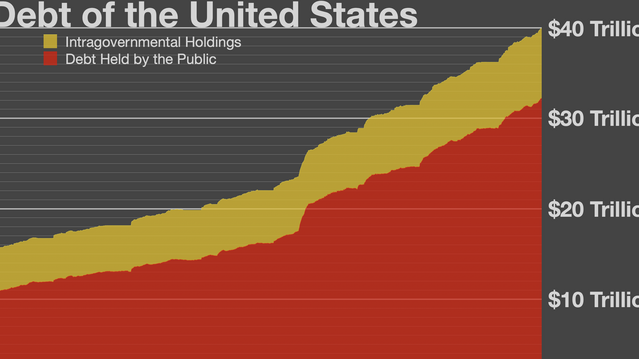
For most of my career I've heard predictions that the federal debt would end in collapse. The warnings have come from both parties, usually from whichever one is not in power. Not having seen a collapse yet, I'm skeptical of new warnings.
A recent one comes in a report by Ambrose Evans-Pritchard published August 11, 2026, in the Telegraph titled "The pieces are falling into place for a US financial crisis." I'm not persuaded by the forecast. But the report includes one fact that isn't a prediction at all, and it applies to your household as much as to the Treasury.
The federal government has been borrowing short. About 85% of government borrowing in recent years has been Treasury bills that mature in a year or less, which now make up 22 percent of outstanding marketable federal debt. This is higher than the range of 15 to 20 percent recommended by the Treasury Borrowing Advisory Committee. Roughly 20 percent of all federal debt comes due within four months.
Both parties built this. The Treasury began leaning on short-term bills in 2023, after Congress suspended the debt ceiling, and Secretary Scott Bessent continued the practice after taking office in 2025, though he had criticized it before he had the job.
The reward of this strategy is short-term savings. Net interest on the national debt is projected at $1.0 trillion in fiscal 2026, according to the Congressional Budget Office. That is more than the government spends on any other budget category except Social Security, including national defense and Medicare. Borrowing short holds that figure down. The risk is that if interest rates rise, a significant chunk of the federal debt gets refinanced at the new higher rate within twelve months.
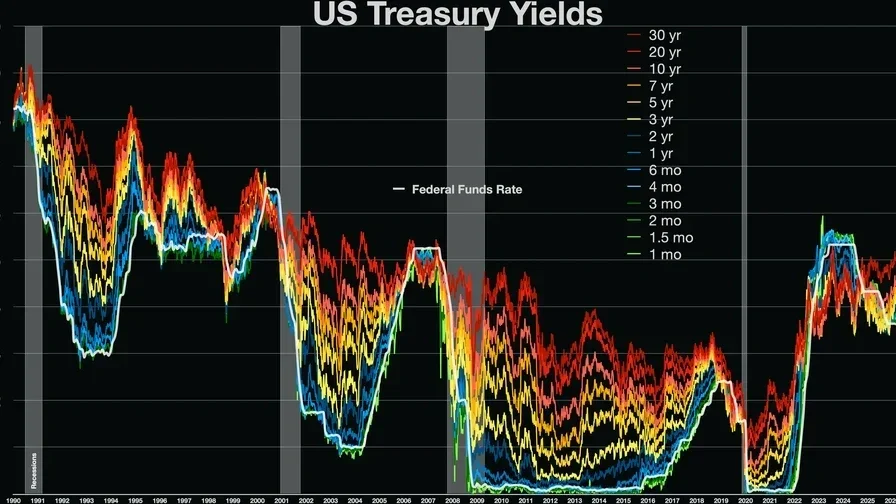
A rate increase is a real possibility. In July the Federal Reserve held its benchmark rate at 3.50 to 3.75 percent, but three regional Federal Reserve bank presidents dissented and wanted an increase. Inflation has run above the Federal Reserve's 2 percent target for more than five years.
How might a rate increase affect your own household debts? A home equity line of credit averages about 7.4 percent and adjusts with the prime rate. Credit card rates average around 20 percent and adjust the same way. Adjustable-rate mortgages reset on a set schedule. Each of those payments can change without you doing anything.
What can you do? I strongly suggest avoiding either of two extreme reactions. One is to dismiss the warning because the last several warnings were wrong. The second is to panic and rush into dramatic action that feels like taking control: selling out of stocks, buying gold, or draining savings to pay off a low fixed-rate mortgage.
A good first step instead is a debt inventory. The real risk is in a variable-interest debt you’ve come to regard as fixed. So list every debt you carry. Mark each one fixed or variable. Add up the variable balances, then recalculate those payments at three percentage points above today's rate. If your budget could absorb the new total, you may not need to do anything. If it could not, you have a specific problem with specific possible solutions: refinance the variable debt to a fixed rate, pay down the variable balances ahead of the fixed ones, or build cash reserves against the reset.
I've written before about why the federal debt may be less dire than the headlines suggest, and I still think much of that argument holds. You cannot know whether a national crisis is coming.
You can, however, assess the risk of a crisis for your own budget and take action to reduce that risk.
Rick Kahler, CFP®, CFT™, is a pioneer in financial therapy and a 2026 inductee into the Financial Therapy Hall of Fame. He is the founder of The Financial Therapy Podcast and Kahler Financial Group, and co-author of “Coupleship Inc.” and “The Financial Wisdom of Ebenezer Scrooge.
The information provided is for educational purposes only and should not be construed as investment advice. The views expressed are subject to change based on market or economic conditions. Past performance is not indicative of future results. Any reference to potential benefits is illustrative and may not apply to your individual circumstances. You should consult with your financial adviser before making any investment decisions. KFG, LLC is an SEC-registered Investment Adviser.
The South Dakota Standard is offered freely and is supported by our readers. We have no political or commercial sponsorship. If you'd like to help us continue our mission to advance independent political and social commentary, you can do so by clicking on the "Donate" button that's on the sidebar to your right.