
Rick Kahler: Living with the realities of a flat economy
For three years, clients have been asking me when the economy will get back to normal. I have started answering that this current flat economy may be the newest redefinition of normal, one of many I’ve seen in 40-plus years of writing about money.
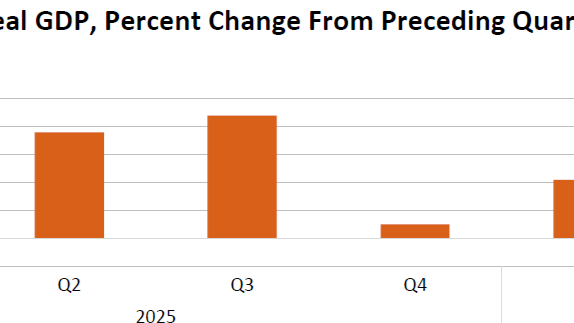
Home sales, auto sales, industrial production, and retail spending tend to boom and bust. None of them have done either for about three years. Existing homes sold in July 2026 at an annual pace of 4.06 million—almost the same as the 4.08 million in July 2023. The Bureau of Labor Statistics put unemployment at 4.1 percent in July, roughly where it has sat for a year, and payrolls have barely grown since the start of 2025.
Those figures come from an August 17, 2026, article in Advisor Perspectives titled "Economic Statistics Are Stuck in Neutral, But for How Long?" by Justin Fox of Bloomberg News. Fox explains that the number of Americans under 65 stopped increasing a decade ago, and some economists now put the number of new jobs needed to hold unemployment steady at close to zero.
Not everyone reads the flat lines as a warning. Conor Sen, writing about housing in August, declared the housing recession over. Greg Ip of The Wall Street Journal argued in mid-August that the country has entered a jobless boom, with output and wealth rising while employment stands still because artificial intelligence is lifting productivity. Only time will tell if either prediction is right.
In the meantime, what might a flat economy mean for you? In the labor market, if you have a job, you are unusually safe, because employers are not firing. If you are looking for a job, you are in trouble, because those same employers are not hiring. In July, people out of work for 27 weeks or longer made up a quarter of everyone unemployed.
If you are looking at buying or selling a home, consider this: I sold real estate in Rapid City in the early 1980s, when mortgage rates passed 17 percent and the market froze solid. Sellers would not come down, buyers could not qualify, and everyone waited for rates to return to normal. The wait lasted years.
Now, mortgage rates are more than double what they were five years ago, which has frozen buyers and sellers in place again. Again, many are waiting for the market to break loose.
Research from economists Ulrike Malmendier and Stefan Nagel found a reason for that inaction. What we expect from the economy is built from what we have personally lived through, and those expectations can lag the facts by decades. The longer you lived with the old normal, the longer it takes to believe in a new one.
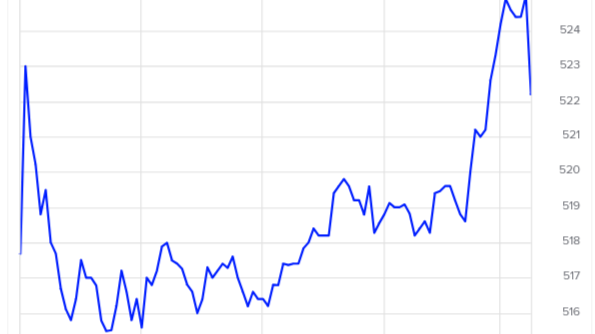
Flat lines also make people nervous. We expect the economy to move, and when it goes still, most of us start bracing for whatever must be coming. That is fear talking, in spite of the data that shows the doomsayers who sound alarms have been wrong more often than they have been right.
Here are my suggestions for coping in a flat economy: If you can, build an extended emergency fund that could cover expenses for up to a year. Do not leave a job before you are sure of a new one. Be realistic about how long everything now takes, from a job search to a home sale. Above all, stop waiting for the old normal to come back. It may not. If a move or decision makes sense for your family, make it on that basis. Within the realities of today’s economic normal, keep on living your life.
Rick Kahler, CFP®, CFT™, is a pioneer in financial therapy and a 2026 inductee into the Financial Therapy Hall of Fame. He is the founder of The Financial Therapy Podcast and Kahler Financial Group, and co-author of “Coupleship Inc.” and “The Financial Wisdom of Ebenezer Scrooge.
The information provided is for educational purposes only and should not be construed as investment advice. The views expressed are subject to change based on market or economic conditions. Past performance is not indicative of future results. Any reference to potential benefits is illustrative and may not apply to your individual circumstances. You should consult with your financial adviser before making any investment decisions. KFG, LLC is an SEC-registered Investment Adviser.
Graphic: U.S Bureau of Economic Analysis
The South Dakota Standard is offered freely and is supported by our readers. We have no political or commercial sponsorship. If you'd like to help us continue our mission to advance independent political and social commentary, you can do so by clicking on the "Donate" button that's on the sidebar to your right.