
Let SNAP users buy what they want. We don’t need a nanny state
Cory Heidelberger just posted a piece in Dakota Free Press about how South Dakota retailers are uneasy about this year’s implementation of a bill that would deny sales of soft drinks to SNAP users in our grocery stores. SNAP stands for Supplemental Nutrition Assistance Program, once familiarly known as “food stamps.”
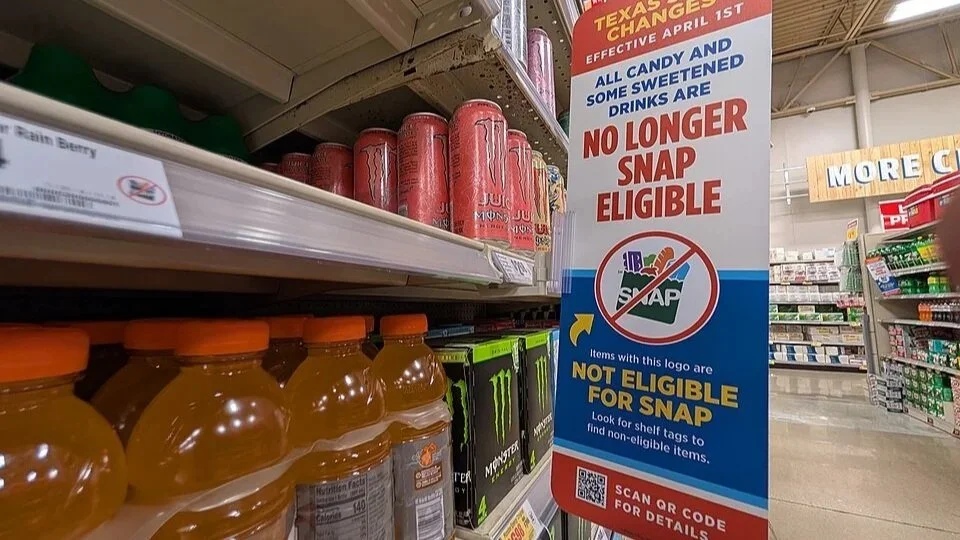
Denying SNAP users access to soft drinks in the name of improving diets lends itself to a collectively smug sense of noblesse oblige, but it incurs some practical challenges for the food industry, particularly if the trend toward eliminating “junk food” from a SNAP purchaser's grocery cart spilled over (as it has in Texas, where the photo above was taken) to other products in South Dakota.
On the retail front, the new regulation is likely to cause some confusion in grocery stores throughout our state. Heidelberger’s piece notes that its implementation will create some administrative chaos, both within the private and public sectors as retailers and civil authorities debate and classify which products are or are not soft drinks.
On a broader scale, if food purchases are further restricted, retailers will have a long list of issues that they’ll have to deal with. First off, how do we come to a common definition of “junk food?” The concept is subjective and vague. I haven’t been able to find a universally recognized, scientifically based definition.
More difficult to quantify are the social effects of telling people how to spend the money they get from the state. Free choice is perhaps the essence of a democratic society. Does singling out a particular class of residents and denying them free choice at the food store extend the liberties that we cherish as Americans? Of course not. It stigmatizes and alienates people who have been taught early on that their access to some food items is restricted.
Think about kids from poor families who are old enough to figure out what’s going on. While grocery shopping with their families, a sign like the one above cuts them off from the aisle where all the treats are. Their more well-off schoolmates can buy that stuff at will, but they can’t. Could there be a more painful sense of exclusion?
Food choice restrictions based on income are an affront to human dignity and may do more harm than good.
John Tsitrian is a businessman and writer from the Black Hills. He was a weekly columnist for the Rapid City Journal for 20 years. His articles and commentary have also appeared in The Los Angeles Times, The Denver Post and The Omaha World-Herald. Tsitrian served in the Marines for three years (1966-69), including a 13-month tour of duty as a radioman in Vietnam. Republish with permission.
Photo: public domain, wikimedia commons
The South Dakota Standard is offered freely and is supported by our readers. We have no political or commercial sponsorship. If you'd like to help us continue our mission to advance independent political and social commentary, you can do so by clicking on the "Donate" button that's on the sidebar to your right.