
What exactly is the just-launched Vote Independent Movement?
What exactly is the Vote Independent Movement?
I have been an independent my entire adult life.
Not because I believe Democrats and Republicans are the same. They aren’t. Not because I split my vote evenly between them. I don’t. And not because I think “independent” is another word for moderate.
Mostly, I’ve stayed independent because my beliefs have never fit neatly enough inside a political party to hand one my loyalty in advance.
That distinction has become unexpectedly relevant to my work.
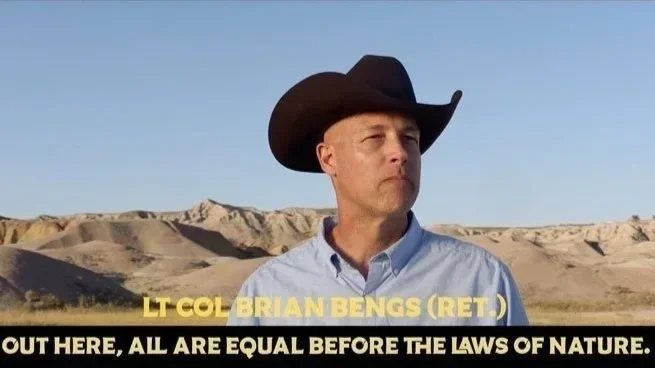
This week, independent U.S. Senate candidate Brian Bengs launched the Vote Independent Movement, or VIM, a new project built around a two-sentence pledge: I pledge to consider every problem based on objective facts. I am not and will not be bound to automatically support the platform of, or the leaders of, any political party.
Brian founded it. I serve as its director.
So what exactly is it? For now, the simplest answer is the most accurate one: VIM is a movement built around a pledge, not a new political party.
That’s it.
There is no requirement to change your voter registration. A Republican can take it and remain a Republican. A Democrat can take it and remain a Democrat. An independent can take it without committing to vote for independent candidates.
And, importantly, taking the pledge does not commit someone to voting for Brian Bengs.
That last point is worth explaining because VIM’s origin is unusual.
Brian created the movement during his campaign for U.S. Senate, and VIM is currently a project of the Bengs campaign, paid for by the campaign.
Bengs says the idea grew out of his experience campaigning across South Dakota and repeatedly encountering people frustrated by the expectation that supporting a political party also requires automatically supporting its leaders and positions.
That experience led to a broader question: Is political independence primarily a voter-registration category, or can it describe a way of approaching politics?
The numbers make the question interesting.
Gallup reported in January that a record 45% of U.S. adults identified politically as independents in 2025, compared with 27% each identifying as Republicans and Democrats.
In South Dakota, 156,908 of 626,871 active registered voters are Independent or No Party Affiliation, more than the number registered as Democrats.
But those numbers have limits.
They don’t tell us why someone registered without a party. They don’t mean 45% of Americans share a political philosophy. And they certainly don’t mean those people agree with one another.
In some ways, that’s the more interesting part.
VIM isn’t attempting to create a platform that all those people agree on. The pledge doesn’t say what to believe about abortion, immigration, taxes, guns, health care, war or data centers. Two people could take it, examine the same issue honestly, and reach completely different conclusions.
The agreement is about the process: evidence first, conclusion second. Party label doesn’t settle the question.
The premise is that this matters most when the problems are hard. From the cost of living and rural health care to Social Security and trillion-dollar deficits, our country isn’t short on problems whose solutions demand serious choices. VIM’s argument is simply that party loyalty shouldn’t determine the answer before the facts do.
VIM doesn’t claim to have one either. The argument is narrower: whatever the answer is, party loyalty shouldn’t determine it before the facts do.
There is another question we deliberately haven’t answered yet: What does VIM become after Election Day?
We don’t know.
The website says so plainly. It could remain a movement, become an organization or take another form. The immediate experiment is much narrower: put the pledge in front of people, count how many take it, and see whether the idea has life beyond the campaign that produced it.
That uncertainty is real, not coyness.
I’ve spent much of the past year working in South Dakota politics and creating spaces where people with very different political beliefs can actually hear one another. One thing I’ve learned is that “independent” is an imprecise word. It can describe a registration, an ideology, a temperament, a protest against the two-party system or simply a person who doesn’t want a label.
VIM is testing another definition.
Independent can be a verb.
Look at the facts. Question your own side. Allow yourself to change your mind. Then decide.
Whether enough people find meaning in that definition to build something lasting around it is the part we don’t know yet.
And that’s probably the most interesting part of the experiment.
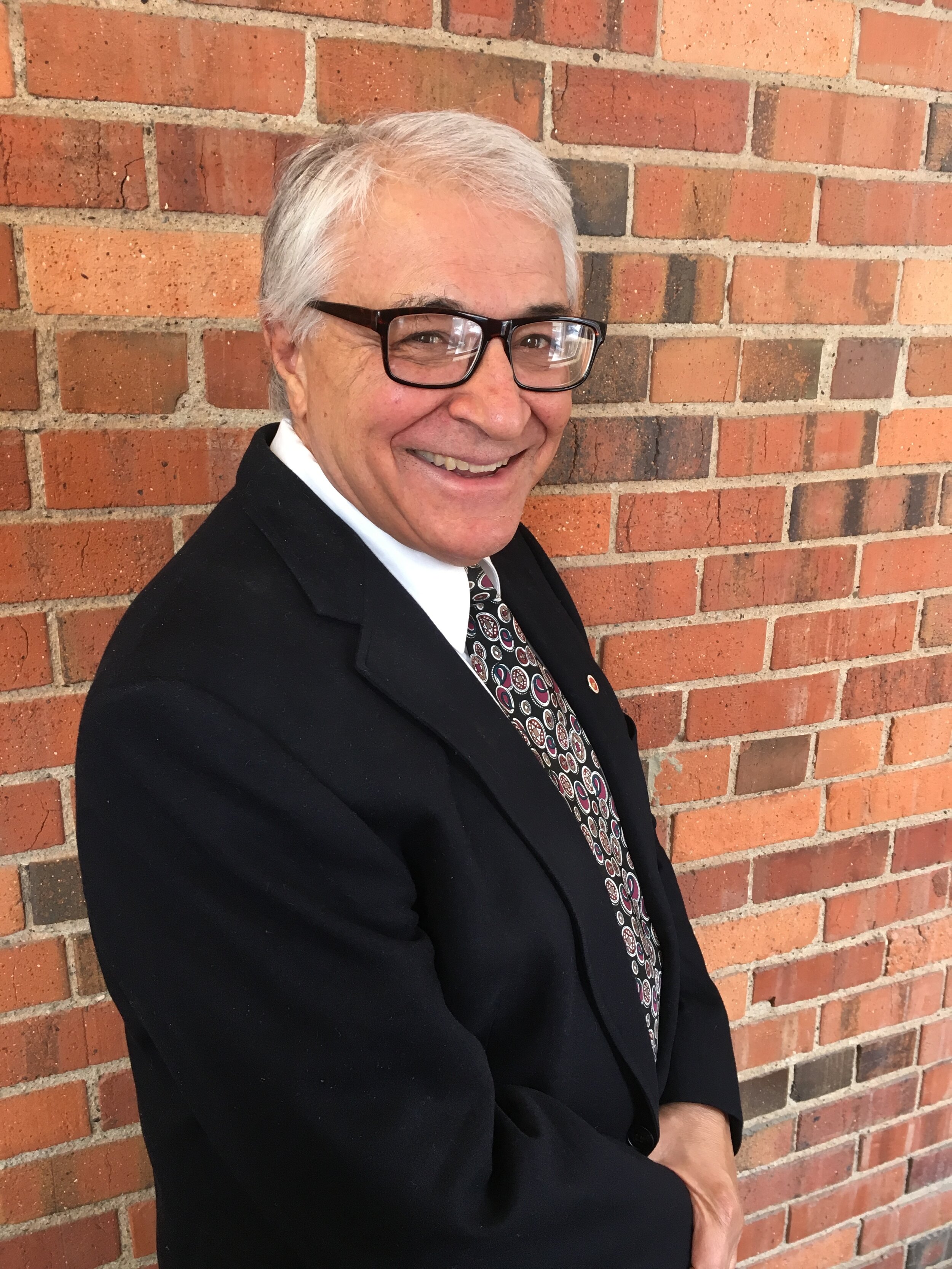
Ngoc Thach lives in South Dakota and is the director of the Vote Independent Movement
Photo: public domain, wikimedia commons
The South Dakota Standard is offered freely and is supported by our readers. We have no political or commercial sponsorship. If you'd like to help us continue our mission to advance independent political and social commentary, you can do so by clicking on the "Donate" button that's on the sidebar to your right.