

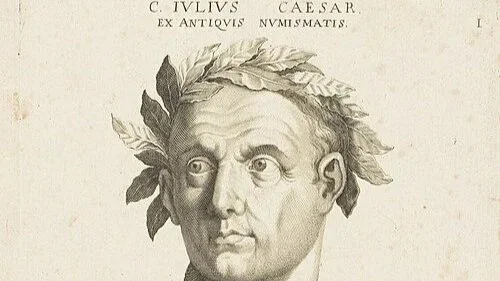
Roman emperor Julius Caesar used AI to write The Gallic Wars
I previously wrote an opinion piece on the risks of reliance on AI.
The legal profession and judiciary by way of example are not sure what to do about AI. About nine months ago while the United States District Court was considering rules for the use of AI, I submitted a proposed rule. The court has yet to consider the issue.
The ABA in a recent article stated, “Judiciary efforts to create rules for artificial intelligence use in the courts have been stalled amid concerns over the feasibility of reaching consensus on how the issues should be handled. The Advisory Committee on Evidence Rules, which advises the Judicial Conference of the United States, has been developing rules for AI use for several years, but efforts have encountered setbacks and resistance, slowing down the possibility of any new policy.”
AI is not the bogeyman. It is man at his best and at his worst. Jaron Lanier is a computer scientist and virtual reality pioneer working for Microsoft. Lanier argues that "artificial intelligence" does not exist as an independent, thinking entity. He describes AI as a form of large-scale social collaboration.
Stanford computer science Professor Fei-Fei Li stated in The Daily Princetonian, “I always say there’s nothing artificial about artificial intelligence. It’s made by humans, it’s deployed by humans, it’s used by humans, and it’s governed by humans.” Please consider these ‘human-related-comments’ as we explore the form of AI employed by Julius Caesar.
Julius Caesar’s The Gallic Wars is described as his first-hand account of the several year military conflicts in which Caesar ‘on behalf of Rome’ was imposing Rome’s will on its territorial holdings in what is now greater France and parts of Germany.
History tells us that Caesar himself wrote the book except for the very last part which was written after his death by Caesar’s confidante Aulus Hirtius. The book is a well written, universally recognized classic and is a self-laudatory memoir. Memoirs, particularly military ones, are most often self-laudatory. Caesar wanted to shape public opinion in Rome and burnish his military achievements.
Caesar is not the true author of the book. He presented the book as his writing. Caesar used AI to write the book. This revelation, only recently introduced to me, bothered me tremendously. I previously read two modern biographies of Caesar, and neither mentioned the issue. One of the biographies devoted a chapter to analyzing the book. I then came upon an article written a few years ago by Latin scholar Ruth Breindel on the authorship question of The Gallic Wars.
Ms. Breindel has a supportable opinion on who wrote The Gallic Wars. “After an exhaustive search of style in Book 1 of the Gallic Wars, focusing on the purpose clause using the subjunctive versus gerunds or gerundives, it is obvious that there were at least two or three scribes at work. . . . . So, to answer the question: who wrote the Gallic Wars? I suggest it was a collaboration between the scribes and Caesar, and not Caesar alone.”
Breindel also wrote, “. . . the one who is deciding on the Latin style (with Caesar’s approval, of course), is the scribe.” Ruth Breindel from the New England Classical Journal: Vol. 48 : Iss. 2 , 1-11.
Whether a writing is done by an outside source (Caesar’s anonymous scribes- the equivalent of contemporary AI) or done through a computer-based language model (AI), the result may be performed by someone or something undisclosed. The artificiality of the matter at hand lies in the false claim of authorship. A fraudulent presentation should be known and defined by what it is - a fraudulent presentation - not by its process.
David Ganje is an attorney who practices natural resources, environmental and commercial law. His website is lexenergy.net
Graphic: public domain, wikimedia commons
The South Dakota Standard is offered freely and is supported by our readers. We have no political or commercial sponsorship. If you'd like to help us continue our mission to advance independent political and social commentary, you can do so by clicking on the "Donate" button that's on the sidebar to your right.