

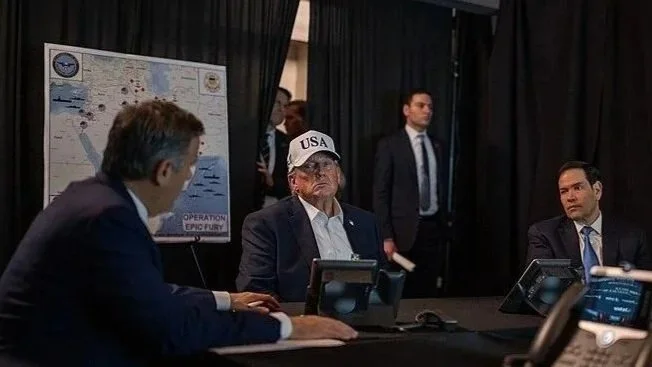
What’s predictable about the war with Iran? Its unpredictability. How long will it go on? Trump says four weeks. We’ll see.
President Trump’s decision to assault Iran over the weekend probably had its intended military and political effects. Like it or not, questions or criticisms of its timing and legality are moot. Trump said yesterday that he expects the operation to last four weeks, maybe less.
All we can do is hope that we got this thing right and that a semblance of sanity returns to that part of the world. Having seen our war in Vietnam (I served there as a Marine for 13 months) stretch out for well over a decade — even after numerous announcements that it would soon end — I’m naturally skeptical that an undertaking as massive as the one going on right now can be over in just a few weeks.
We’ll see.
Meanwhile we need to go about the business of measuring and reacting to the consequences of the war on our day-to-day lives here at home.
We South Dakotans, practically to a person, will be affected, possibly significantly.
For one thing, based on how energy futures reacted in pre-market trading last night, spiking up by 8% at one point, we might as well start preparing for higher gasoline prices in coming weeks.
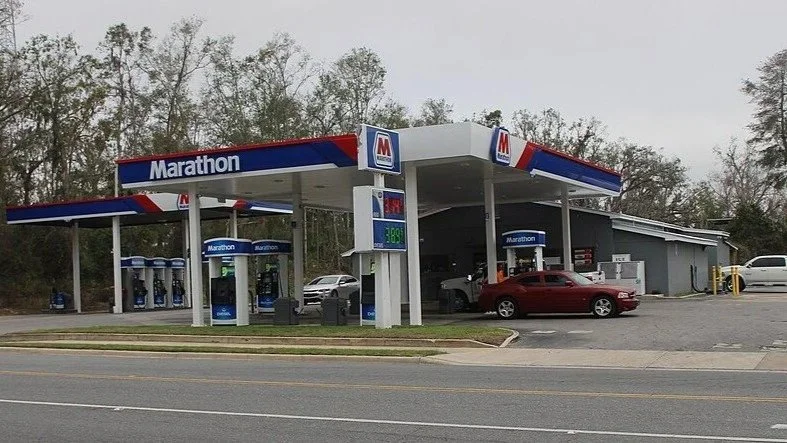
Wholesale gasoline futures have already come up about 15% since the beginning of the year, so this sudden spike since the missile-launching in the middle east began looks to accelerate that trend. Mid-grade gas prices at the pump are averaging $2.88/gallon in South Dakota. Last night’s 8% jump in crude oil, if it holds as trading continues through the week, could push retail gasoline up over the $3/gal threshold.
That’s still well below the $4/gal “tipping point” that AAA thinks will change driving behavior, but given Iran’s immense oil production and the fact that it controls the strategically important Strait of Hormuz, a cutoff of supplies coming from and through there seems likely to drive gas prices higher.
So not only should South Dakota drivers be keeping an eye on the situation, businesses that depend on tourists driving to the state this summer should and will also be paying close attention.
Participants in another pillar of South Dakota’s economy, agriculture, have to be wary of developments during and after this war. The American Farm Bureau notes that energy costs significantly add to farming overhead expenses, both directly and through the price of fertilizer. In addition, a noticeable reduction in demand for gasoline by drivers will lead to a drop in corn-based ethanol consumption, which in turn will put downside pressure on corn markets.
The effects of a lingering war and high fuel prices will certainly have a negative effect on everybody, but as to crop prices, per se, I doubt they’ll be much affected unless China becomes a factor. China gets around 14% of its oil from Iran. I could see where a cutoff from that supply might cause the Chinese to change their buying commitments for American soybeans as a retaliatory measure. If so, you can expect the soybean market to go downhill.
That’s in the realm of speculation, of course, so barring that scenario from occurring, demand for food won’t change much because of the war. Supply chains between the U.S. and our principle overseas markets are far removed from the fighting. The Indian Ocean, which is where most American forces seem to be concentrated, is well away from the trans-Pacific and trans-Atlantic seaways that the American ag trade uses.
So far, overnight trading grains and soybeans has been muted … emphasis on “so far.”
Here’s hoping that Trump’s four-week timetable comes to pass and that something close to the pre-war status quo emerges once we pull out of that region. You can call me skeptical because, given the multi-centuried animosties that have defined societies in that part of the world, I don’t see those ingrained, hateful relationships being resolved or even tamped-down in the space of a month.
Then again, maybe a lasting peace will come about.
We’ll see.
John Tsitrian is a businessman and writer from the Black Hills. He was a weekly columnist for the Rapid City Journal for 20 years. His articles and commentary have also appeared in The Los Angeles Times, The Denver Post and The Omaha World-Herald. Tsitrian served in the Marines for three years (1966-69), including a 13-month tour of duty as a radioman in Vietnam. Republish with permission.
Photo: President Trump reviewing Iran operations, public domain, wikimedia commons
The South Dakota Standard is offered freely and is supported by our readers. We have no political or commercial sponsorship. If you'd like to help us continue our mission to advance independent political and social commentary, you can do so by clicking on the "Donate" button that's on the sidebar to your right.
Follow us and comment on X and BlueskyPhoto: President Trump reviewing Operation Epic Fury, public domain, wikimedia commons



_(55121599389).jpg)