

China is pouring billions into South American grain-handling ports, effectively bypassing American farmers
Investigate Midwest last week posted an article titled “China Is Investing Billions in Latin America, Potentially Sidelining U.S. Farmers for Decades to Come.” The piece was re-posted this morning by Successful Farming. It follows similar reports published throughout 2025 in, among others, The Wall Street Journal.
The common theme throughout this stream of reports? China has successfully completed an end run around the tariff-obsessed Donald Trump, whose trade policies dating back to his first term have permanently altered the world’s grain trading matrix.
For its part, China made a strategic decision to pivot away from the U.S. as a primary supplier of soybeans and shift its sourcing to South American farmers, mainly in Brazil and Argentina. Given that so far for all of 2025 the Chinese will have purchased or promised to purchase far fewer quantities of soybeans than they have in the recent past (18 million tons in 2025 vs. 27 million tons in 2024), it appears that Chinese purchases of the South American product are making up for any cutbacks of U.S. supplies.
American farmers, who this year harvested about the same amount of soybeans (4.3 billion bushels) as they did in 2024 are feeling the financial strain created by the low prices that have come about since the China’s sharp pullback from American suppliers. The collective cash crunch among U.S. farmers has been somewhat mitigated by the Trump administration’s scheduled payment of $12 billion to farmers affected by the president’s ill-conceived tariff policies, but the money is a temporary fix that doesn’t change the underlying fundamentals.
As to China’s investments in South American port facilities, the numbers are eye-popping. Says the Investigate Midwest report:
The Port of Santos, Brazil, has a 58-terminal complex the size of 1,500 American football fields where ships loaded with soybeans will set sail for China, which has invested $285 million in the facility.
In Peru, China is investing $3.5 billion in the deep water Port of Chancay, which will become a redistribution center for products, including soybeans, that will come from all over South America.
The Chancay port reduces shipping time between Peru and Shanghai, China, from 35 days to 23 days.
In the meantime, soybean shipments from American ports are static or falling. At New Orleans, shipments grew by less than 3% from September 2024 to September 2025. At the Los Angeles District they fell 15% and Seattle shipments fell 81%.
The trend seems clear and it isn’t encouraging. I believe that Trump’s mishandled trade war with China during his first term has done lasting damage to the U.S. ag sector. The soybean industry has to redouble its efforts to create a new wave of demand, much of that coming from potential industrial uses for soybeans. They say crisis spurs innovation, so now’s the chance for farmers to put that principle to the test.
Meantime, American farmers will have to contend with a developing new world order in soybean production and distribution, which will add to global supplies and likely put downside pressure on prices for the foreseeable future.
John Tsitrian is a businessman and writer from the Black Hills. He was a weekly columnist for the Rapid City Journal for 20 years. His articles and commentary have also appeared in The Los Angeles Times, The Denver Post and The Omaha World-Herald. Tsitrian served in the Marines for three years (1966-69), including a 13-month tour of duty as a radioman in Vietnam. Republish with permission.
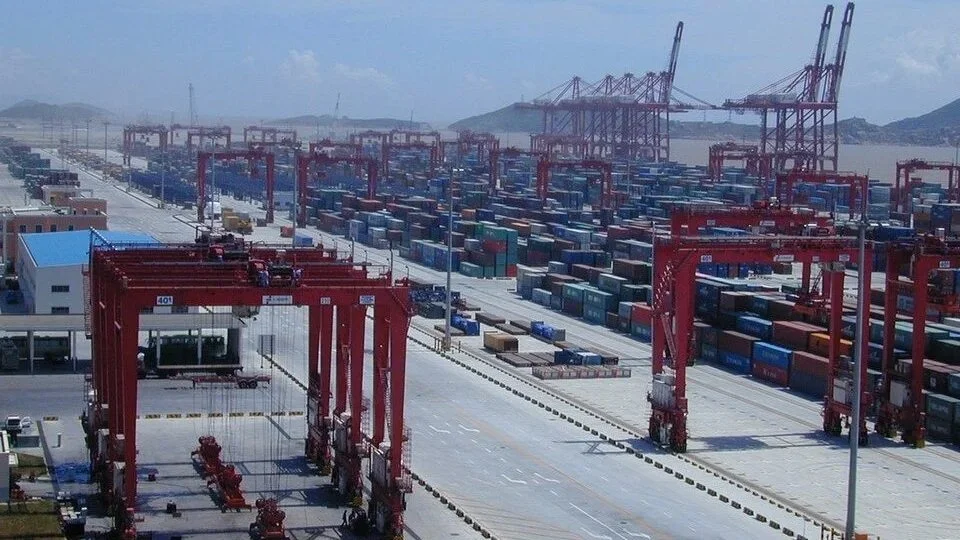
Photo: Port of Shanghai, public domain, wikimedia commons
The South Dakota Standard is offered freely and is supported by our readers. We have no political or commercial sponsorship. If you'd like to help us continue our mission to advance independent political and social commentary, you can do so by clicking on the "Donate" button that's on the sidebar to your right.